Ancient Roman Literary Gardens
Gardens are not central in Latin literature, but usually somewhere off to the side, as was often the real garden. They appear, however, in some form in nearly all literary genres of Latin literature--history, satire, epigrams, epics, letters, lyric poetry, elegies, and novels--and often edge their way into larger socio-econom......
fra 799,-
På lager i 1 butikker
Kjøp på nett
På lager
Frakt og levering
Sammenligning av produkter
Her finner du de fire mest populære produktene i denne kategorien i en lignende prisklasse som det du ser på nå.


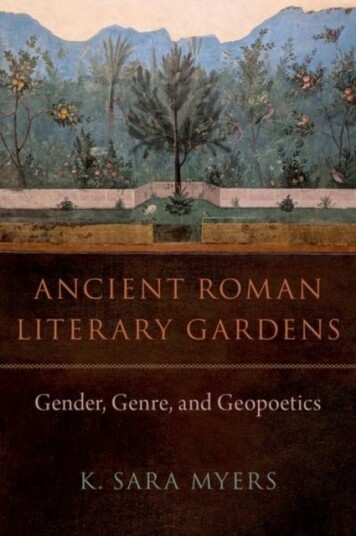
Ancient Roman Literary Gardens
799,-


Produktinformasjon
Gardens are not central in Latin literature, but usually somewhere off to the side, as was often the real garden. They appear, however, in some form in nearly all literary genres of Latin literature--history, satire, epigrams, epics, letters, lyric poetry, elegies, and novels--and often edge their way into larger socio-economic and political discussions about Roman identity, gender, wealth, and land use. Through an analysis of ancient garden studies and close readings of major Latin texts from the first centuries BCE and CE, K. Sara Myers examines the function and representation of garden descriptions in the work of a broad range of Roman authors, such as Cicero, Catullus, Vergil, Varro, Horace, Ovid, Petronius, Columella, Statius, and Pliny the Elder and Younger.While most of the sources in this study are poetic and their gardens fictional, it is still important to situate these works in their cultural and historical contexts. By understanding how to interpret the importance of these spaces in the literature in which they appear, readers will not only better comprehend the aesthetic and ethical values of the work in question, but they will also gain a better insight into ancient Roman attitudes toward gender, art, and human relationships with nature. Myers shows how some Romans constructed the garden as a space under male control: Men are cultivators, while women are cultivated. Literary gardens can symbolize a range of positive masculine ideals and identities for elite men--from the rustic farmer to the philosopher--but can also represent unmanly luxury and leisure. Women in gardens are usually sexualized, depicted as virginal or sexually transgressive, especially when they attempt to express ownership over these spaces. In almost all these texts, the artificial and artistic arrangement of the raw material of nature invites self-reflexivity, which Myers calls "geopoetics," or a "poetics of the earth."
Spesifikasjon
Produkt
| Produktnavn | Ancient Roman Literary Gardens |
| book typ | boker, hobby og fritid, reise |
Populære produkter
Pris og prishistorikk
Akkurat nå er 799,- den billigste prisen for Ancient Roman Literary Gardens blant 1 butikker hos Prisradar. Sjekk også vår topp 5-rangering av beste bøker for å være sikker på at du gjør det beste kjøpet.
Creative Cardstock Daisies Metallic 230Gm 10 SheetMandalas Med Alfer | Språk: DanskBølgepapp Med Metallisk A4 Mix 10 FargerParametric and Generative Design with Rhino Python and Grasshopper
Python ProgrammingBreaking the Model Context ProtocolDesigning Self-Healing Systems with NETPython for Engineers and Scientists