-27%
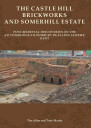
Castle Hill Brickworks and Somerhill Estate PostMedieval Discoveries on the A21 TonbridgetoPembury Dualling Scheme, Kent
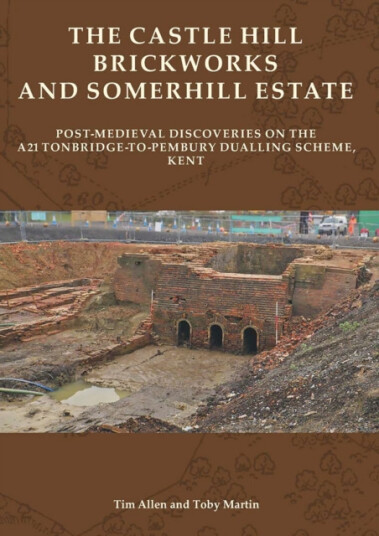
The northern part of the A21 Tonbridge to Pembury Dualling Scheme in Kent ran though the Somerhill Estate, and the dualling of the road resulted in the excavation of the buried remains of the Castle Hill Brickworks, which was established in the early 19th century to serve the estate and continued in use until the 1930s. Furth......
fra 399,-
Tilgjengelig i 2 butikker
Kjøp på nett
Fjernlager
Frakt og levering
På lager
Frakt og levering
Sammenligning av produkter
Her finner du de fire mest populære produktene i denne kategorien i en lignende prisklasse som det du ser på nå.
-27%
Castle Hill Brickworks and Somerhill Estate PostMedieval Discoveries on the A21 TonbridgetoPembury Dualling Scheme, Kent
399,-
549,-

Produktinformasjon
The northern part of the A21 Tonbridge to Pembury Dualling Scheme in Kent ran though the Somerhill Estate, and the dualling of the road resulted in the excavation of the buried remains of the Castle Hill Brickworks, which was established in the early 19th century to serve the estate and continued in use until the 1930s. Further to the south-east, avoidance of the scheduled hillfort on Castle Hill necessitated the removal of Burgess Hill Farm, one of the post-medieval farms attached to the estate. The barn and stables were dismantled and have now been re-erected at the Weald and Downland Living Museum, but the rest of the farm was demolished. In between, excavation of a platform at Burgess Rough adjacent to the A21 revealed a passing place on the slope up to Castle Hill, where elements of the 17th/18th-century road were preserved, and on the other side of the road a turnpike marker post was found in Castle Hill Wood.The Castle Hill Brickworks contained three kilns, a complex of drying sheds, a workshop and pugmills, together with a cottage, office, clay pits and ponds. One kiln was well preserved, the others had been heavily robbed. Six drying sheds were excavated, together with an L-shaped workshop. Two pugmills were positioned adjacent to the workshop. These open-air pony- or donkey-powered machines were used to mill the raw clay into a smooth and even ‘pug’ before being moulded into bricks. The brick or stone bases of both pugmills were exceptionally well preserved.Infilled quarry pits for clay were found to the north-west and west of the brickworks. At Castle Hill Wood, to the south, the rising ground had also been quarried for clay, but here quarrying took the form of small terraces dug into the hillside and drainage ditches dug to channel water downslope into a pond used in brickmaking.At Burgess Rough an earthwork platform was identified during the walkover survey. The earliest feature was a curving ditch just inside the eastern platform edge. Although undated, this ditch was sealed by a thick layer of slowly accumulated colluvium. West of this ditch (and truncating it) was a metalled trackway of two phases. Horseshoes recovered from the earlier phase of use of the track and slag from the earlier metalling indicate a 17th/18th-century date.To the south, the post-medieval Burgess Hill Farm consisted of a farmhouse, threshing barn, stables and oasthouse. A cattle lodge is also shown on the 1842 tithe map, though it was demolished soon afterwards, and this proved to be a timber, post-built structure. Following the dismantling of the listed barn and stables for re-erection at the Weald and Downland Living Museum, and the recording and demolition of the farmhouse in April 2015, trenches and small areas were excavated to characterise the below-ground remains.Historic Building reportThe farmstead, later called Burgess Hill, was established between 1645 and 1660 after the Somerhill Estate was sequestered during the Commonwealth. By the time the land was recovered the South Frith chase had been disparked and divided into holdings. At Burgess Hill the waste was cleared and a timber‐framed farmhouse was built in a fairly crude fashion on the roadside from much re‐used timber, including some from a medieval building. No archaeological evidence remained to indicate the location of the earliest phase of agricultural buildings although the threshing barn built around a century later also contained medieval timbers, these in their third phase of re‐use.In the 18th century, the replacement of the front of the house with a brick façade and the construction of the threshing barn and stable indicate the farm was thriving. Some small‐scale dairy production may also have been carried out in the newly‐constructed cellar beneath the house, although this addition caused structural problems for the remainder of the farmhouse’s lifespan.In 1842, the apportionment and earlier tithe map show that the farm was still in the ownership of the Somerhill Estate and tenanted as a separate farm, with arable, orchards, cattle and hops, however, agricultural depression was affecting the farming industry and in 1849 the estate was sold. Although the farm remained in the ownership of the estate, it appears to have been absorbed into a larger holding after the sale and the farmhouse was occupied by workmen and agricultural labourers. The agricultural buildings continued to be adapted and pigsties were added as an extension to the stable. A shift in the direction of the farm was shown by the demolition of the cattle lodge and the construction of a oast house.In the 1860s, sewage from Tunbridge Wells polluted Somerhill’s land, necessitating the construction of the Northern Sewage Farm, which in turn caused the demolition of themansion at Colebrooke Park, served by several small lodges at the roadside, two ofwhich were later called North Lodge and Middle Lodge.At the turn of the 20th century the farmhouse was extended and modernised and returned
Spesifikasjon
Produkt
| Produktnavn | Castle Hill Brickworks and Somerhill Estate PostMedieval Discoveries on the A21 TonbridgetoPembury Dualling Scheme, Kent |
Populære produkter
Pris og prishistorikk
Akkurat nå er 399,- den billigste prisen for Castle Hill Brickworks and Somerhill Estate PostMedieval Discoveries on the A21 TonbridgetoPembury Dualling Scheme, Kent blant 2 butikker hos Prisradar. Sjekk også vår topp 5-rangering av beste bøker for å være sikker på at du gjør det beste kjøpet.
Ses Creative 00113, Gutt/Jente, Klistremerker Inkludert, Fargebok / Album |Classic Flash 2Celebrating ChesterMurder at Cottonwood Creek
My First Illustrated Bible Story: Jesus Calms the Storm - English / Popular Stories from Bible / Easy to Understand Children Books with Pictures /Our Planet Earth - Natural Wonders : Knowledge Encyclopedia for ChildrenOur Planet Earth - Rock & Minerals : Knowledge Encyclopedia for ChildrenInventions & Discoveries - Inventions in Motion: Knowledge Encyclopedia For Children
Counting Train Track Choo Choo and Clickety ClackWorld History - Renaissance : Knowledge Encyclopedia For ChildrenWorld History - Wars : Knowledge Encyclopedia For ChildrenWorld History - Middle Ages : Knowledge Encyclopedia For Children