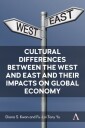
Cultural Differences between the West and East Asia and their Impacts on Global Economy
Most works on Asian or global studies adopt mainstream Neoclassical methods to explain economic and social development. However, quantitative and optimisation techniques are unable to provide a deep understanding of policy change between the West and East Asia. To fill the gap, this book uses evolutionary perspective......
fra 1 399,-
På lager i 1 butikker
Kjøp på nett
Fjernlager
Frakt og levering
Sammenligning av produkter
Her finner du de fire mest populære produktene i denne kategorien i en lignende prisklasse som det du ser på nå.

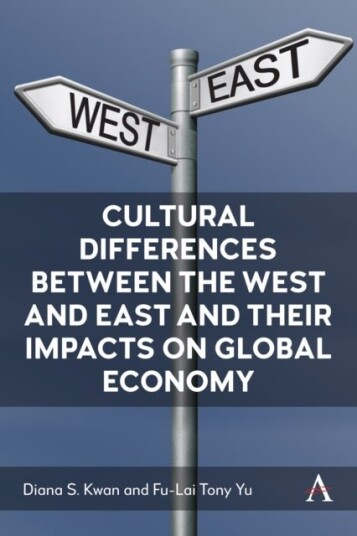
Cultural Differences between the West and East Asia and their Impacts on Global Economy
1 399,-


Produktinformasjon
This volume consists of four parts, comprising 15 chapters. It highlights the roles of culture and institutions on economic and social changes. The West is illustrated by the United States, Britain or Canada and the East, by chopstick economies such as China, Taiwan and Hong Kong. Part I is the theoretical framework. It contains five chapters. Chapter 1 (Searching for the New Paradigm: Uncertainty and Learning in the Evolutionary Approach) employs the evolutionary perspective to interpret economic and social transformations. Chapter 2 (Culture and Institutions on Economic Transformation) explains the relationship between traditional belief/ideology/religion and culture. The West adopts rule of law while the East, rule by law. In chapter 3 (Quilt and Shame Cultures: Anglosphere versus Chopstick Economies), a Christian nation in Western economies, such as the United States, is identified as a society of guilt while chopstick economies in the East, such as China, are embedded with Confucianism, a society of shame. Cultural difference has implications on social control and educational reform. In chapter 4 (Chinese Legalism and European Mercantilism), contemporary China utilises Confucianism supplemented by Legalism to strengthen the state power. Legalism is akin to European Mercantilism. Chapter 5 (An Imagined Social World in the West and East) highlights the imagined world in the West and East.Part II presents different cases in entrepreneurship and everyday life creativity. Chapter 6 (Entrepreneurship: Transformative and Adaptive) argues that the United States, due to individualism and self-assertion, brings technological breakthroughs in the world while Asian economies such as China receive training in Confucianism, and provide the world with mainly adaptive entrepreneurs and imitative products. Culture makes a difference in entrepreneurship and hence economic transformation. Chapter 7 (Intellectual Property Protection: The Case of Smartphone) explains the origin of the disputes in U.S.–China intellectual property protection. It is illustrated by Huawei, a learner in technological transfer. Chapter 8 (The ‘New Opium War’: On Supplying Fentanyl) argues that China’s ways of handling the production and consumption of fentanyl contrast sharply with the Western powers. Fentanyl crisis is the New Opium War! Chapter 9 (Electoral versus Authoritarian States: Combating Coronavirus Disease Pandemic) compares pandemic-associated measures in the United States and China. It reveals that culture counts in tackling global responses to infectious diseases. Chapter 10 (If Shakespeare Is the West, then Jin Yong is the East) compares the works of Shakespeare and Jin Yong. Shakespeare works focus on individualism and self-reliance while Yin Yong works stress on familism and patriotism.Part III highlights the impacts of culture on Chinese economies. Chapter 11 (A Winning Tactic? Social Construction of Peasanty in Socialist China) explains how Mao Zedong turned Chinese peasanty, if not serfs, into a winning game for his party. Peasanty were ‘oppressed’ by their landlords. After painbearers cried out their suffering and killed the landlords, they could stand up again. They supported the Chinese Communist Party instead of the Nationalist Party (Kuomintang). Chapter 12 (Culture, Nationalism and Wolf Warrior Diplomacy) argues that foreign policy reflects culture and history. China’s wolf warrior diplomacy traces its roots back to culture. Chapter 13 (Impacts on Taiwan: Sharing the Same Culture versus Different Social Identity) examines whether the same culture will entail different impacts on Taiwan’s politics. It also explores whether different social identities affect Taiwan’s political affairs and economic transformation. To further reveal the impacts of cultural differences on policy change, the authors use Hong Kong as a case study (Chapter 14: British Hong Kong versus post-1997 Hong Kong). They examine if British ruling (representing Western culture) entails any impact on the economy and society in Hong Kong (now a Chinese city). Chapter 15 (Western Culture in Hong Kon Hong Rengan and Ho Tung) explains and illustrates how Hong Rengan (Taiping Heavenly Kingdom) and Ho Tung (a member of Hong Kong Legislative Council) absorb Western knowledge in Hong Kong. Deeply embedded with Chinese culture, Hong could not help the Taiping Heavenly Kingdom to establish a real republic in China. Ho’s flexibility and dual identities helped him work comfortably in Hong Kong, thus setting up a pre-condition for Hong Kong to move into a global financial centre.
Spesifikasjon
Produkt
| Produktnavn | Cultural Differences between the West and East Asia and their Impacts on Global Economy |
| book typ | boker, fagboker, samfunnsvitenskap |
Populære produkter
Pris og prishistorikk
Akkurat nå er 1 399,- den billigste prisen for Cultural Differences between the West and East Asia and their Impacts on Global Economy blant 1 butikker hos Prisradar. Sjekk også vår topp 5-rangering av beste bøker for å være sikker på at du gjør det beste kjøpet.