
Giving Up
Since quitting her previous band, Nicole Lux Fermie had come out as queer, and her songwriting style had changednow she was culling from brand new experiences around love, gender and sexuality that she couldnt have fathomed before. I had lived the life of a musician on the breadline, she explains emphatically. I was da......
fra 429,-
På lager i 1 butikker
Kjøp på nett
Fjernlager
Frakt og levering

Sammenligning av produkter
Her finner du de fire mest populære produktene i denne kategorien i en lignende prisklasse som det du ser på nå.
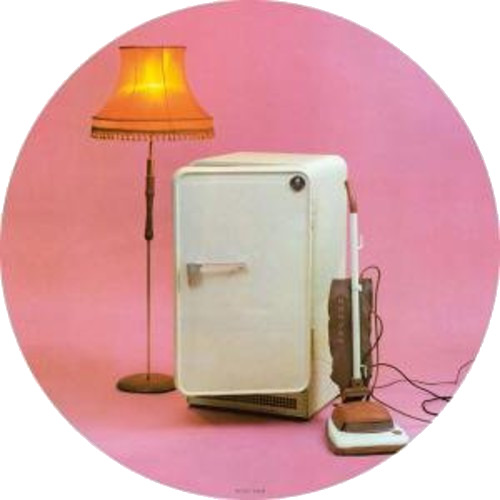


Giving Up
429,-


Produktinformasjon
Since quitting her previous band, Nicole ‘Lux’ Fermie had come out as queer, and her songwriting style had changed—now she was culling from brand new experiences around love, gender and sexuality that she couldn’t have fathomed before. “I had lived the life of a musician on the breadline,” she explains emphatically. “I was dating the drummer in the band. We broke up. I realized I was queer, fell in love with a woman, and took a break from music for years because I felt like everything I'd written thus far had been completely disingenuous, because I had this whole other side of my life that I hadn't lived. I came back to music with something to say.”On the surface, many of the songs on Giving Up are about romantic relationships—their joyful beginnings and rock-bottom heartbreaks. But beyond that, they’re about finding oneself, digging deep to excavate the true meaning of one’s identity. As a queer woman, Nicole discovered aspects of herself through connecting to others, and those truths are the fuel that propel the album forward. These are songs specifically about how queer people love, and how that can be a mirror for the rest of the world—not the other way around.“The underlying current on this album is definitely what it's like to have relationships with an undertone of socialprecarity,” says Nicole. “Nothing is scripted. Nothing is written. There's a weird trust system that isn't anything close to what I’d experienced in heterosexual relationships. And furthermore, there’s just something about getting off the conveyor belt, so to speak. Society wants to support you if you make money, have babies and keep propping up the economy, right? So there's that pressure, and once you come out and are okay with letting go of that, you're open to challenging everything. You're open to challenge the way that you have relationships with people in general—friendships, people you sleep with, people you don't sleep with. The biggest undercurrent on this album is that letting go of societal pressure.”Nothing says “letting go of societal pressure” like diving headfirst into polyamory—which is the subject of Giving Up’s opening track “Poly-Amerie”. Set against sweeping strings and forceful, dynamic guitars, the song tells the story of a love triangle, three women who are trying to be romantically open while keeping their jealousy at bay. “The song is about the differences in the ways that men and women navigate relationships,” says Nicole. “In WLW relationships, it can sometimes feel like we never break up—there's this sort of weird, deep bond that women create with each other, where even if they’ve come to hate each other it’s still this long and drawn-out separation.” “Poly-Amerie” is about discovering the long and drawn-out breakups that I'd never had with men, where the cut was pretty clean.” “Poly-Amerie” was one of the first tracks Nicole wrote with LuxJury, her first foray into queer storytelling, and as such perfectly sets the tone of the album.The record’s first single “Hot Mess” is a liltingly groovy slice of yacht-rock-adjacent indie that would sound at home floating from a car stereo cruising down the Pacific Coast Highway. It’s also about a specifically queer romantic experience: the sensation of reliving your passionate teenage years as a result of rediscovering your sexuality as an adult. “You completely compromise on any sort of self-care and are willing to be a complete doormat for the sake of that first queer love you experience later in life,” explains Nicole, “where you're like, ‘I'm going for this with everything I’ve got.’”Closing out this trifecta is “I Could Love You”, possibly Giving Up’s most introspective offering. Nicole openly admits that she finds the song hard to talk about, the sonic equivalent of a good, hard look in the mirror. “It was the first time that I ever embodied a side of myself that was not very good, that I wasn’t proud of,” she says candidly. “I always talk about how women are caring, but “I Could Love You” is about how women can be cruel—I had fallen out of love and didn't know how to get out of it and was getting really embittered and resentful of the person who was making me feel responsible for them. I discovered that I had that in me, which is something I'd have never experienced and didn’t like, so I wrote about it.”“Honestly, most of this album is me getting over my first queer relationship. There's no lie about it,” Nicole says finally. “I feel like a teenager: it should be an angsty album, but it came out the way it did, hopefully, because I'm a bit older.” There is something fresh and young about it, though, and exciting, and uplifting—it’s like being able to time travel back to your high school years, but with the power to change the story for the better. “Coming out as a queer woman helped me more deeply understand my own female sexual identity, which I felt was more socially
Spesifikasjon
Produkt
| Produktnavn | Giving Up |
Populære produkter
Pris og prishistorikk
Akkurat nå er 429,- den billigste prisen for Giving Up blant 1 butikker hos Prisradar. Sjekk også vår topp 5-rangering av beste vinyl plater for å være sikker på at du gjør det beste kjøpet.
Jordan Sand Baby Ghost VinylIts A Mystery Charlie Brown VinylBnnt Radwan Ghazi Moumneh A Faithful Daughter VinylWah Vinyl
Nadine El Roubi Life Is Beautiful Again VinylChristmas Party VinylRayland Baxter True Violet VinylCinema Stereo 12 34 Vinyl
Satanic Planet Dead Deities VinylKiss Rock And Roll Over Eddie Kramer 2026 Mix VinylJack Blocker Big Jefe VinylTeddy Swims Ugly Ultra Marine Blue Vinyl