Historic Real Estate
A detailed study of early historical preservation efforts between the 1780s and the 1850s In Historic Real Estate, Whitney Martinko shows how Americans in the fledgling United States pointed to evidence of the past in the world around them and debated whether, and how, to preserve historic structures as permanent features of......
fra 399,-
På lager i 1 butikker
Kjøp på nett
Fjernlager
Frakt og levering
Sammenligning av produkter
Her finner du de fire mest populære produktene i denne kategorien i en lignende prisklasse som det du ser på nå.


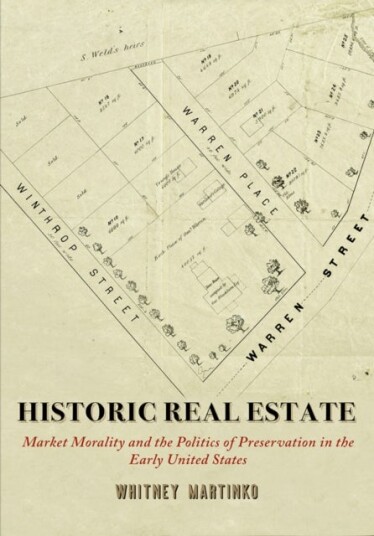
Historic Real Estate
399,-


Produktinformasjon
A detailed study of early historical preservation efforts between the 1780s and the 1850s In Historic Real Estate, Whitney Martinko shows how Americans in the fledgling United States pointed to evidence of the past in the world around them and debated whether, and how, to preserve historic structures as permanent features of the new nation's landscape. From Indigenous mounds in the Ohio Valley to Independence Hall in Philadelphia; from Benjamin Franklin's childhood home in Boston to St. Philip's Episcopal Church in Charleston, South Carolina; from Dutch colonial manors of the Hudson Valley to Henry Clay's Kentucky estate, early advocates of preservation strove not only to place boundaries on competitive real estate markets but also to determine what should not be for sale, how consumers should behave, and how certain types of labor should be valued. Before historic preservation existed as we know it today, many Americans articulated eclectic and sometimes contradictory definitions of architectural preservation to work out practical strategies for defining the relationship between public good and private profit. In arguing for the preservation of houses of worship and Indigenous earthworks, for example, some invoked the "public interest" of their stewards to strengthen corporate control of these collective spaces. Meanwhile, businessmen and political partisans adopted preservation of commercial sites to create opportunities for, and limits on, individual profit in a growing marketplace of goods. And owners of old houses and ancestral estates developed methods of preservation to reconcile competing demands for the seclusion of, and access to, American homes to shape the ways that capitalism affected family economies. In these ways, individuals harnessed preservation to garner political, economic, and social profit from the performance of public service. Ultimately, Martinko argues, by portraying the problems of the real estate market as social rather than economic, advocates of preservation affirmed a capitalist system of land development by promising to make it moral.
Spesifikasjon
| Produkt | |
|---|---|
| Produktnavn | Historic Real Estate |
| book typ | boker, hobby og fritid, kunst og kultur, arkitektur |
FAQ
Black Friday er fredag 27. november 2026. Sammenlign prisen på Historic Real Estate hos flere butikker, og sjekk prishistorikken der den er tilgjengelig. Kontroller at tilbudene gjelder samme modell og variant, og ta med fraktkostnaden når du sammenligner.
Populære produkter
Pris og prishistorikk
Akkurat nå er 399,- den billigste prisen for Historic Real Estate blant 1 butikker hos Prisradar. Sjekk også vår topp 5-rangering av beste bøker for å være sikker på at du gjør det beste kjøpet.
Change Your Karma Ancient Greek Practices to Break Old Cycles and Shape Your DestinyBioflocculants for Sustainable Wastewater TreatmentAntiracist Futures for Games and PlayAntiracist Futures for Games and Play
Oath of the ChosenMonetary Economics and Policy A Foundation for Modern Currency SystemsWhat's a Human Being Worth? One Woman's Struggle in Stalin's Circle of HellA Discontented Land Internet Addiction and Lost Young Men in America
What's a Human Being Worth? One Woman's Struggle in Stalin's Circle of HellA Discontented Land Internet Addiction and Lost Young Men in AmericaPoisoning the Well How Forever Chemicals Contaminated AmericaThinking with Lauren Berlant