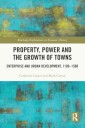
Property, Power and the Growth of Towns Enterprise and Urban Development,11001500
Local enterprise, institutional quality and strategic location were of central importance in the growth of medieval towns. This book, a study of 112 English towns, emphasises these key factors. This book takes an interdisciplinary approach, drawing from the disciplines of economics and history....
fra 549,-
På lager i 2 butikker
Kjøp på nett
Fjernlager
Frakt og levering
På lager
Frakt og levering
Sammenligning av produkter
Her finner du de fire mest populære produktene i denne kategorien i en lignende prisklasse som det du ser på nå.

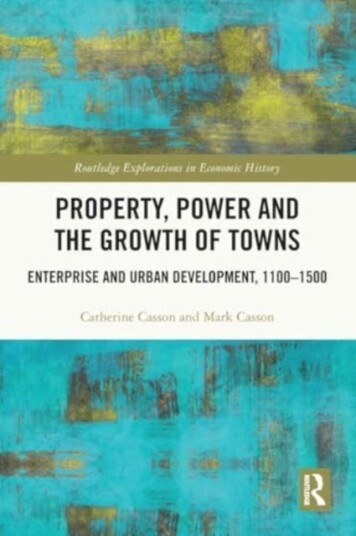
Property, Power and the Growth of Towns Enterprise and Urban Development,11001500
549,-

Produktinformasjon
Local enterprise, institutional quality and strategic location were of central importance in the growth of medieval towns. This book, comprising a study of 112 English towns, emphasises these key factors. Downstream locations on major rivers attracted international trade, and thereby stimulated the local processing of imports and exports, while the early establishment of richly endowed religious institutions funnelled agricultural rental income into a town, where it was spent on luxury goods produced by local craftsmen and artisans, and on expensive, long-running building schemes.Local entrepreneurs who recognised the economic potential of a town developed residential suburbs which attracted wealthy residents. Meanwhile town authorities invested in the building and maintenance of bridges, gates, walls and ditches, often with financial support from wealthy residents. Royal lordship was also an advantage to a town, as it gave the town authorities direct access to the king and bypassed local power-brokers such as bishops and earls.The legacy of medieval investment remains visible today in the streets of important towns. Drawing on rentals, deeds and surveys, this book also examines in detail the topography of seven key medieval towns: Bristol, Gloucester, Coventry, Cambridge, Birmingham, Shrewsbury and Hull. In each case, surviving records identify the location and value of urban properties, and their owners and tenants.Using statistical techniques, previously applied only to the early modern and modern periods, the book analyses the impact of location and type of property on property values. It shows that features of the modern property market, including spatial autocorrelation, were present in the middle ages. Property hot-spots of high rents are also identified; the most valuable properties were those situated between the market and other focal points such transport hubs and religious centres, convenient for both, but remote from noise and pollution.This book takes an interdisciplinary approach, drawing on expertise from the disciplines of economics and history. It will be of interest to historians and to social scientists looking for a long-run perspective on urban development.
Spesifikasjon
Produkt
| Produktnavn | Property, Power and the Growth of Towns Enterprise and Urban Development,11001500 |
| book typ | boker, fagboker, religion historie og filosofi, historie |
Populære produkter
Pris og prishistorikk
Akkurat nå er 549,- den billigste prisen for Property, Power and the Growth of Towns Enterprise and Urban Development,11001500 blant 2 butikker hos Prisradar. Sjekk også vår topp 5-rangering av beste bøker for å være sikker på at du gjør det beste kjøpet.
Creative Cardstock Daisies Metallic 230Gm 10 SheetMandalas Med Alfer | Språk: DanskBølgepapp Med Metallisk A4 Mix 10 FargerParametric and Generative Design with Rhino Python and Grasshopper
Python ProgrammingBreaking the Model Context ProtocolDesigning Self-Healing Systems with NETPython for Engineers and Scientists