The Disease of Money
Mikael S. Adolphson, The Disease of Money - Japan's Monetization in the Early Middle Ages...
fra 749,-
På lager i 2 butikker
Kjøp på nett
Fjernlager
Frakt og levering
På lager
Frakt og levering
Sammenligning av produkter
Her finner du de fire mest populære produktene i denne kategorien i en lignende prisklasse som det du ser på nå.


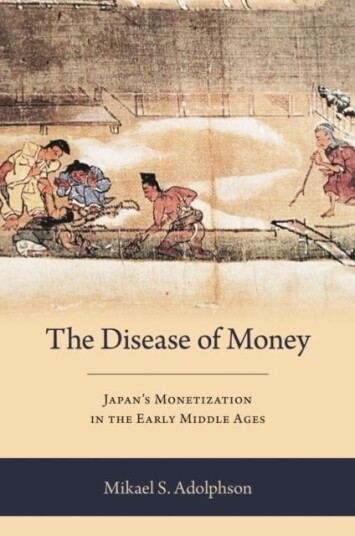
The Disease of Money
749,-


Produktinformasjon
The twelfth century was a pivotal time in Japan’s history. It witnessed intense factionalism at the imperial court in Kyoto, Japan’s first national civil war, and above all the rise of warriors to national prominence, culminating with the establishment of Japan’s first warrior government, the Kamakura Shogunate. This dramatic power shift has understandably dominated historical debates. However, focusing almost exclusively on military and political narratives led scholarship to overlook the extraordinary economic transformation that unfolded in parallel. Beginning in the mid-twelfth century, Japan transformed from a rice economy to one based on cash coins imported from China. For the next three centuries, transactions, tax collections, and even fines were expressed in terms of copper coins, which in turn spurred the emergence of trade cities, new classes of merchants and artisans, and the establishment of guilds. And yet not a single coin was issued in Japan. This "minting-less" monetization seemingly stood in sharp contrast to developments in medieval Europe, where monetization went hand in hand with rulers who struck their own coins. Adolphson offers an analysis of this initial import of Chinese coins and its subsequent monetization through three lenses. First, he provides a contextual and macroeconomic explanation by looking at the context of East Asian trade, where the political and economic developments in Song China also played an especially vital role. Second, the matter of agency behind the import of and demand for coins is dealt with in depth, revealing that several groups played key roles, but above all that Chinese merchants were the most influential agents. Finally, in an effort to put Japan’s medieval monetization into a disciplinary perspective, a comparison is made with Scandinavia around the same time. It shows that while Japan took a different route to its monetization, there were also comparable situations in Europe. By moving beyond the warrior-centric view, The Disease of Money uncovers a richer, more complex portrait of medieval Japan—one of innovation, adaptation, and global economic connectivity.
Spesifikasjon
Produkt
| Produktnavn | The Disease of Money |
| book typ | boker, fagboker, religion historie og filosofi, historie |
Populære produkter
Pris og prishistorikk
Akkurat nå er 749,- den billigste prisen for The Disease of Money blant 2 butikker hos Prisradar. Sjekk også vår topp 5-rangering av beste bøker for å være sikker på at du gjør det beste kjøpet.
RegnskapslovenHolzbau-TaschenbuchInnovations in Smart Cities Applications, Volume 9Wind Resistance Technology for High-Speed Railway Bridges
Advances in Structural EngineeringPop Up Fun! My First Pop Up Story Book: Alice In Wonderland - Pop Up Stories For KidsFinger Puppet Board Book: Bruce The Bear- Story Board Book With Finger Puppet For ChildrenMechanics and Dynamics in Structural Engineering
Materials in Structural EngineeringICT for Smart Cities and CommunitiesMilletsHelselover (samleutgave: 14 lover)