Who Gets to Be Indian?
An investigation into how Native American identity became a commodity, from cultural appropriation to ethnic fraud to disenrollmentSettler capitalism has been so effective that the very identities of Indigenous people have been usurped, misconstrued, and weaponized. In Who Gets to Be Indian?, scholar and writer Dina Gilio-Whi......
fra 349,-
På lager i 2 butikker
Kjøp på nett
Fjernlager
Frakt og levering
På lager
Frakt og levering
Sammenligning av produkter
Her finner du de fire mest populære produktene i denne kategorien i en lignende prisklasse som det du ser på nå.


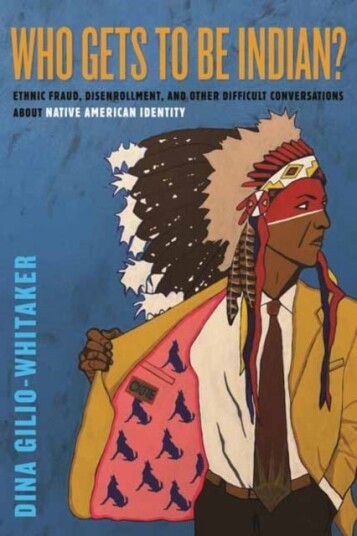
Who Gets to Be Indian?
349,-

Produktinformasjon
<b>“This incendiary j’accuse isn’t afraid to name names.”—<i>Publishers Weekly</i>, starred review<br><br>“Indigeneity is caught between truth tellers and tricksters.…Dina Gilio-Whitaker boldly espouses our truths while confronting the tricksters among us. Indigenous America needs more truth tellers like her and books like this.”—Gabe Galanda, Indigenous rights attorney<br><br>An investigation into how Native American identity became a commodity, from cultural appropriation to ethnic fraud to disenrollment</b><br><br>Settler capitalism has been so effective that the very identities of Indigenous people have been usurped, misconstrued, and weaponized. In <i>Who Gets to Be Indian?, </i>scholar and writer Dina Gilio-Whitaker (Colville Confederated Tribes) explores how ethnic fraud and the commodification of Indianness has resulted in mass confusion about what it means to be Indigenous in the United States.<br><br>As an entry point to the seemingly intractable problem of ethnic fraud, Gilio-Whitaker critically looks to the film industry, including a case study of Sacheen Littlefeather, who is most known as the Native American woman that rejected an Oscar on behalf of Marlon Brando in 1973—though later revealed, she was not who she said she was. Gilio-Whitaker argues that this pretendian phenomenon originated in Southern California when the United States was forcing assimilation of Indians into white America culturally, but also into its capitalist economic system. With Indianness becoming a marketized commodity in the Hollywood film business, the field became open to anyone who could convincingly adopt an Indian persona.<br><br>Deeply researched using socio-historical analysis, Gilio-Whitaker offers insights from her own experiences grappling with identity to provide clarity and help readers understand how the commodification of Indianness have ultimately left many people of legitimate American Indian heritage to be disconnected from their tribes. Personal and compelling, Gilio-Whitaker takes settler capitalism to task and helps us better understand how we got here in order to counteract the abuses of pretendianism and disenrollment.
Spesifikasjon
| Produkt | |
|---|---|
| Produktnavn | Who Gets to Be Indian? |
| book typ | boker, fagboker, samfunnsvitenskap |
Pris og prishistorikk
Akkurat nå er 349,- den billigste prisen for Who Gets to Be Indian? blant 2 butikker hos Prisradar. Sjekk også vår topp 5-rangering av beste bøker for å være sikker på at du gjør det beste kjøpet.
The New GirlLiterature of the 1950s: Good, Brave Causes Volume 6Logan's Lantern A Lunar New Year StorySoil Processes
Speech Disorder in Nineteenth Century Britain The History of StutteringOil and Gas in the Caucasus & Caspian A HistoryEducation and the Quest for Modernity in TurkeyVivisection in Historical Perspective
Alexander Jolly’s Christian Sacrifice in the Eucharist A Critical EditionLinguistic Disadvantage in Jury Trials Lessons from Hong Kong and BeyondThe Mathnawi of Jalalu?ddin Rumi, Volume III Persian Text of Books 3 and 4Heritage, Power, and Liminality Culture and the Crisis of Authoritarian Transitions in Myanmar
Finance and Culture in Nineteenth Century Britain Volume II: The World of the Stock ExchangeFinance and Culture in Nineteenth Century Britain Volume IV: Financial Crises and Financial FraudIndustrial Women, 1760–1914 Volume II: Women in Factory IndustriesIndustrial Women, 1760–1914 Volume III: The Industrial Home and Education
Industrial Women, 1760–1914 Volume IV: Law, Resistance and PowerThe Asylum in the Long Nineteenth Century Volume II: Magdalen Asylums, Lock Hospitals and Lock Asylums in England in the Long Nineteenth CenturyThe Heritage, Creativity and Innovation Nexus Critical Approaches and Interdisciplinary PerspectivesCultural Tourism