Arrested Mobility
In the US, police conduct millions of traffic stops for reasons unrelated to safety. Study after study confirm that Black drivers experience higher rates of non-safety stops, searches, and use of force than White drivers.In Arrested Mobility: Overcoming the Threat to Black Movement, Charles T. Brown, founder and CEO of Equita......
fra 369,-
På lager i 2 butikker
Kjøp på nett
Fjernlager
Frakt og levering
På lager
Frakt og levering
Sammenligning av produkter
Her finner du de fire mest populære produktene i denne kategorien i en lignende prisklasse som det du ser på nå.


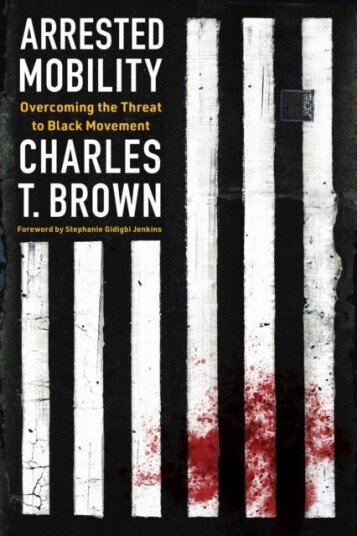
Arrested Mobility
369,-


Produktinformasjon
<p>In the US, police conduct millions of traffic stops for reasons unrelated to safety. Study after study confirm that Black drivers experience higher rates of non-safety stops, searches, and use of force than White drivers. </p><p>In <i>Arrested Mobility: Overcoming the Threat to Black Movement</i>, Charles T. Brown, founder and CEO of Equitable Cities, examines why mobility is not afforded in the same way to everyone. He argues that the legacy of structural racism and White supremacy has led to disinvestment and over-policing in Black communities and communities of color, thwarting opportunity, as physical mobility and social mobility are intrinsically linked. This experience for Black people around the world is what Brown refers to as arrested mobility. </p><p>Mobility embodies freedom and allows people, places, and cities to thrive. In the US, freedomsynonymous with national identityis so often represented by acts of movement such as walking, cycling, driving a car or traveling to a different city. However, for Black Americans, exercising freedom of mobility continues to mean confronting the harsh reality of White fear, fragility, and violence. </p><p>Understanding the causes of arrested mobility, will help us to develop solutions to increase mobility for Black people and other marginalized groups, Brown explains. The conditions society has created have their roots in what Brown calls The Four Ps: Polity, Policy, Planning, and Policing. He examines the four Ps, drawing from research, his own experience and the experience of other Black Americans. Brown then suggests solutions, some of which are already being implemented in the US. </p><p>In <i>Arrested Mobility</i>, Brown shows how un-arresting mobility creates an opportunity not just for a better society for Black people, but for all people. Arrested mobility is detrimental to our society as a whole, not just the people it directly harms. By not providing equitable access to jobs, community resources, and public spaces, we are limiting the potential of a large percentage of our population to participate and contribute to society. Change is possible. We can un-arrest mobility together. Charles T. Brown shows us how. </p>
Spesifikasjon
| Produkt | |
|---|---|
| Produktnavn | Arrested Mobility |
| book typ | boker, fagboker, samfunnsvitenskap |
Populære produkter
Pris og prishistorikk
Akkurat nå er 369,- den billigste prisen for Arrested Mobility blant 2 butikker hos Prisradar. Sjekk også vår topp 5-rangering av beste bøker for å være sikker på at du gjør det beste kjøpet.
The New GirlLiterature of the 1950s: Good, Brave Causes Volume 6Logan's Lantern A Lunar New Year StorySoil Processes
Speech Disorder in Nineteenth Century Britain The History of StutteringOil and Gas in the Caucasus & Caspian A HistoryEducation and the Quest for Modernity in TurkeyVivisection in Historical Perspective
Alexander Jolly’s Christian Sacrifice in the Eucharist A Critical EditionLinguistic Disadvantage in Jury Trials Lessons from Hong Kong and BeyondThe Mathnawi of Jalalu?ddin Rumi, Volume III Persian Text of Books 3 and 4Heritage, Power, and Liminality Culture and the Crisis of Authoritarian Transitions in Myanmar
Finance and Culture in Nineteenth Century Britain Volume II: The World of the Stock ExchangeFinance and Culture in Nineteenth Century Britain Volume IV: Financial Crises and Financial FraudIndustrial Women, 1760–1914 Volume II: Women in Factory IndustriesIndustrial Women, 1760–1914 Volume III: The Industrial Home and Education
Industrial Women, 1760–1914 Volume IV: Law, Resistance and PowerThe Asylum in the Long Nineteenth Century Volume II: Magdalen Asylums, Lock Hospitals and Lock Asylums in England in the Long Nineteenth CenturyThe Heritage, Creativity and Innovation Nexus Critical Approaches and Interdisciplinary PerspectivesCultural Tourism