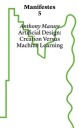
Artificial Design
At the beginning of the 2020s, so-called intelligent systems such as GPT-3, OpenAI, Dall-E, Midjourney or Disco Diffusion made it possible to generate images thanks to textual commands (prompts) associated with large data sets available online. As part of machine learning technologies, these systems found their place in......
fra 169,-
På lager i 1 butikker
Kjøp på nett
På lager
Frakt og levering
Sammenligning av produkter
Her finner du de fire mest populære produktene i denne kategorien i en lignende prisklasse som det du ser på nå.

Artificial Design
169,-


Produktinformasjon
At the beginning of the 2020s, so-called ‘intelligent’ systems such as GPT-3, OpenAI, Dall-E, Midjourney or Disco Diffusion made it possible to generate images thanks to textual commands (‘prompts’) associated with large data sets available online. As part of machine learning technologies, these systems found their place in art and the ‘creative industries’ (fashion design, graphic design, product design, architecture, etc. ), profoundly reconfiguring these professions in the same way desktop publishing and design (DTP and CAD) had in the 1980s. Although these productions prove rather easily stereotyped – merely remixing existing content – debates have focused on the possible replacement of designers by artificial intelligence (AI), shielding the essential question: what is the spectrum of risk and opportunity when it comes to machine learning for design practices?In order to better understand how these AIs participate in what we propose to call a ‘design under artifice’ – that is to say, an insidious subversion of design’s historical principles under the influence of cognitive-behavioural approaches – it is first necessary to establish a more detailed understanding of the psychological theories specific to machine learning. Participating in a neurocognitivist approach that assimilates the human psyche to a circuit switch, machine learning is part of the (already) long history of creative software, which aims both to democratise access to computers and to standardise creative practices. Just as these programs have automated a certain number of tasks usually assigned to designers, machine learning technologies displace and redefine the notions of creation and subjectivity. Although they run the risk of homogenising the sensitive world, they also open up new forms of cooperation with machines, of which the contemporary design studios interviewed for this essay offer a glimpse. In this book, Anthony Masure reconnects the challenges of artificial intelligence and design, while proposing a series of avenues to guide this ideal of automation on a small scale, in a controlled and 'tailor-made' way, so that machine learning can foster invention and curiosity.
Spesifikasjon
| Produkt | |
|---|---|
| Produktnavn | Artificial Design |
| book typ | boker, hobby og fritid, kunst og kultur |
Populære produkter
Pris og prishistorikk
Akkurat nå er 169,- den billigste prisen for Artificial Design blant 1 butikker hos Prisradar. Sjekk også vår topp 5-rangering av beste bøker for å være sikker på at du gjør det beste kjøpet.
Adjustable Textbook Covers, Model Or-8, 26.8 X 49 Cm, Set Of 5Enzymatic Treatment of Biomass for EnergyGenerative AI Risks and Benefits within Human-Machine TeamsMultimodal Deep Learning and Data-Centric Systems for Smart Healthcare and Clinical Decision Support
Artificial Intelligence in ImmunoengineeringStem Cell ToxicologyInternal Medicine Bedside Procedures, An Issue of Medical Clinics of North AmericaNew and Emerging Infectious Diseases, An Issue of Dermatologic Clinics
Antipsychotics in Children and Adolescents, An Issue of Child and Adolescent Psychiatric Clinics of North AmericaOrthopedics for the Small Animal Practitioner, An Issue of Veterinary Clinics of North America: Small Animal PracticeThe ICU Workforce, An Issue of Critical Care ClinicsApplications of FDG-PET Imaging in the Management of Patients with Various Malignancies, An Issue of PET Clinics