Consolidating Democracy Politicization and Partisanship in India
Based on an analysis of survey data collected from a national sample of the Indian population in 1966, this study addresses itself to theoretical issues like the origins of popular politicization, its meaning for political development, and the appropriateness of democracy for the new states of Asia and Africa. The development......
fra 949,-
På lager i 2 butikker
Kjøp på nett
Fjernlager
Frakt og levering
På lager
Frakt og levering
Sammenligning av produkter
Her finner du de fire mest populære produktene i denne kategorien i en lignende prisklasse som det du ser på nå.


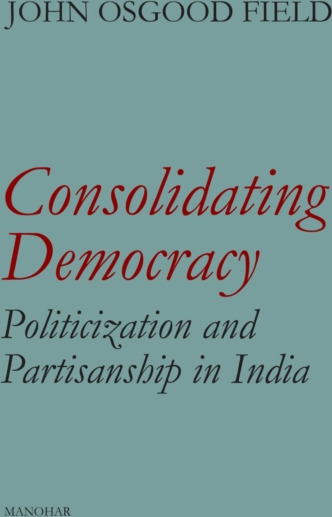
Consolidating Democracy Politicization and Partisanship in India
949,-

Produktinformasjon
Based on an analysis of survey data collected from a national sample of the Indian population in 1966, this study addresses itself to theoretical issues like the origins of popular politicization, its meaning for political development, and the appropriateness of democracy for the new states of Asia and Africa. The development of party affiliations by ordinary citizens is one indication that politicization is occurring. In India, partisanship (indeed, politicization generally) would seem to be a consequence more of political penetration than of modernization or social mobilization. Conceivably, too, partisanship represents an important democratic ingredient in mass political culture. More fundamentally, partisanship may predispose people to certain beliefs concerning the conduct of political affairs and hence contribute to the ‘cultural institutionalization’ of democracy. The ultimate question is how a system like democracy acquires an indigenous mass base in a society to which it is not native. India is an excellent test case because of its almost continuous participatory democracy since independence, and because India fulfills the requirements set by theory in so many ways yet seems to depart from the predicted results. The data reveal the prevalence of party loyalties at all levels of Indian society, their prominence relative to their political attributes, and their strong – but non exclusive – linkage to legitimacy orientations. The modernization paradigm does explain much of the variance in party support, but there remains extensive partisanship even among the least modern and mobilized segments of the population. Theoretically these findings confirm the potentially constructive influence which politicization can have when new political structures require institutionalization in society. They imply too that once established, a democracy can flourish even in the absence of extensive modernization and unquestioned unity. It would be a mistake, however, to assume either that India’s success to date with democratic politics can be easily replicated elsewhere or indeed that political development in India itself is secure.
Topplisten: Other Brand Bøker
Spesifikasjon
| Produkt | |
|---|---|
| Produktnavn | Consolidating Democracy Politicization and Partisanship in India |
| Merke | Other Brand |
Populære produkter
Pris og prishistorikk
Akkurat nå er 949,- den billigste prisen for Consolidating Democracy Politicization and Partisanship in India blant 2 butikker hos Prisradar. Sjekk også vår topp 5-rangering av beste bøker for å være sikker på at du gjør det beste kjøpet.
Substantive Protections in International Investment LawPostwar Hollywood AdaptationsThe HeavyMary E. Hart
99 Moments That Defined Rock & RollInterrogating Female Pop Star DocumentariesMidwest EmoCode of Federal Regulations, Title 21 Food and Drugs 1-99, Revised as of April 1, 2025