Friars Quakers Industry and Urbanisation
The development of Cabot Circus shopping centre presented a rare opportunity for the archaeological investigation of a large part of the Broadmead suburb of Bristol....
fra 449,-
På lager i 2 butikker
Kjøp på nett
Fjernlager
Frakt og levering
På lager
Frakt og levering
Sammenligning av produkter
Her finner du de fire mest populære produktene i denne kategorien i en lignende prisklasse som det du ser på nå.


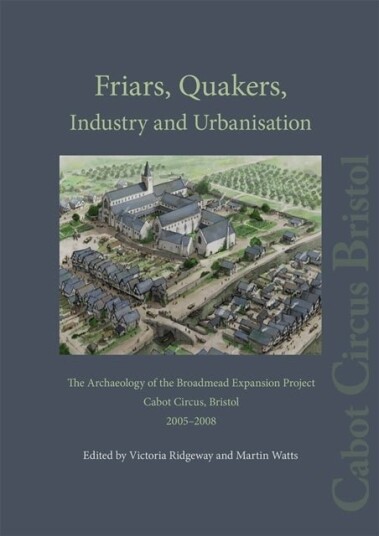
Friars Quakers Industry and Urbanisation
449,-


Produktinformasjon
The development of Cabot Circus shopping centre presented a rare opportunity for the archaeological investigation of a large part of the Broadmead suburb of Bristol. The former presence of a Dominican Friary and later Friends’ Meeting House were already well known, and surviving buildings from both remain within a large open piazza in the west of the new development. Further elements of the friary complex, including remains of the church and two cloisters, were revealed in various archaeological interventions within the area of the former precinct, enabling a reconstruction of the precinct and its environs to be made. The project has also shed light on other aspects of the suburb’s past that were previously less well known. Borehole investigations have allowed the prehistoric environment of the River Frome valley to be characterised, with episodes of small-scale tree clearance from the surrounding slopes during the later Neolithic and early Bronze Age, and the floodplain remaining as mud flats until the development of the Broadmead suburb in the 12th century and the arrival of the Dominicans in the 13th century. River access and the presence of flowing water were important assets for the industrial medieval and later suburb, which was home to tanning, leatherworking, ironworking and cloth industries. The Dissolution saw the demolition of parts of the friary, and by the later 17th century the surviving claustral buildings were occupied by trade guilds and the Quakers had built their first Meeting House. The 18th and 19th centuries were times of enormous expansion for Bristol, when large-scale development occurred, expanding the suburb to the north and east of the former friary. These new developments included industrial premises, saw mills, cabinet works and malthouses, alongside terraces and courts of domestic dwellings. The recovery of a significant assemblage of tobacco pipe bowls and kiln wasters has enabled the development of new typology for Bristol, which should prove invaluable in dating future assemblages recovered from the city.
Spesifikasjon
| Produkt | |
|---|---|
| Produktnavn | Friars Quakers Industry and Urbanisation |
| book typ | boker, fagboker, religion historie og filosofi, arkeologi |
Populære produkter
Pris og prishistorikk
Akkurat nå er 449,- den billigste prisen for Friars Quakers Industry and Urbanisation blant 2 butikker hos Prisradar. Sjekk også vår topp 5-rangering av beste bøker for å være sikker på at du gjør det beste kjøpet.
Marian Keyes and the Politics of Commercial FictionNew Zealand's Irish RevolutionComputational Methods for RNA-RNA InteractionsRNA Remodeling Proteins
Sampling AlgorithmsComputational Methods in Synthetic BiologyEwing SarcomaMethods for The Conservation of Microorganisms