
Heraldry in Urban Society
This book analyses the perceptions and functions of heraldry in medieval urban societies by drawing on both English- and German-language sources from the late fourteenth to the early sixteenth centuries....
fra 1 299,-
På lager i 2 butikker
Kjøp på nett
Fjernlager
Frakt og levering
På lager
Frakt og levering


Sammenligning av produkter
Her finner du de fire mest populære produktene i denne kategorien i en lignende prisklasse som det du ser på nå.


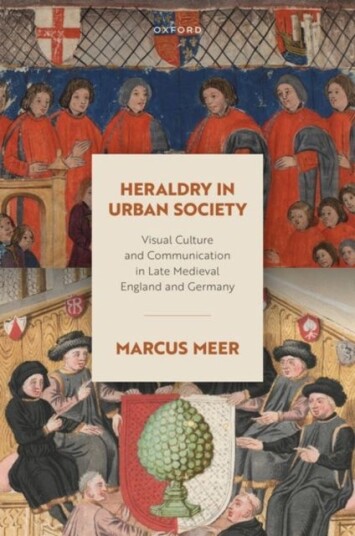
Heraldry in Urban Society
1 299,-


Produktinformasjon
Heraldry is often seen as a traditional prerogative of the nobility. But it was not just knights, princes, kings, and emperors who bore coats of arms to show off their status in the Middle Ages. The merchants and craftsmen who lived in cities, too, adopted coats of arms and used heraldic customs, including display and destruction, to underline their social importance and to communicate political messages. Medieval burgesses were part of a fascination with heraldry that spread throughout pre-modern society and looked at coats of arms as honoured signs of genealogy and history. Heraldry in Urban Society analyses the perceptions and functions of heraldry in medieval urban societies by drawing on both English- and German-language sources from the late fourteenth to the early sixteenth centuries. Despite variations that point to socio-political differences between cities (and their citizens) in the relatively centralized monarchy of medieval England and the more independent-minded urban governments found in the less closely connected Holy Roman Empire, urban heraldry emerges as a versatile and ubiquitous means of multimedia visual communication that spanned medieval Europe. Urban heraldic practices defy assumptions about clearly demarcated social practices that belonged to ''high''/''noble'' as opposed to ''low''/''urban'' culture. Townspeople''s perceptions of coats of arms paralleled those of the nobility, as they readily interpreted and carefully curated them as visual expressions of identity. These perceptions allowed townspeople of all ranks, as well as noble outsiders, to use heraldry and its display - along with its defacement and destruction - in manuscripts, spaces (such as town houses, public monuments, halls, and churches), and performances (like processions and joyous entries) to address perennial problems of urban society in the Middle Ages. The coats of arms of burgesses, guilds, and cities were communicative means of individual and collective representation, social and political legitimization, conducting and resolving conflicts, and the pursuit of elevated status in the urban hierarchy. Likewise, heraldic communication negotiated the all-important relationship between the city and wider, extramural society - from the commercial interests of citizens to their collective ties to the ruler.
Spesifikasjon
| Produkt | |
|---|---|
| Produktnavn | Heraldry in Urban Society |
| book typ | boker, dokumentar og fakta, historie og dokumentar, krig og historie |
FAQ
Black Friday er fredag 27. november 2026. Sammenlign prisen på Heraldry in Urban Society hos flere butikker, og sjekk prishistorikken der den er tilgjengelig. Kontroller at tilbudene gjelder samme modell og variant, og ta med fraktkostnaden når du sammenligner.
Populære produkter
Pris og prishistorikk
Akkurat nå er 1 299,- den billigste prisen for Heraldry in Urban Society blant 2 butikker hos Prisradar. Sjekk også vår topp 5-rangering av beste bøker for å være sikker på at du gjør det beste kjøpet.
Markt und StaatVorstandsvergutung als Mechanismus der Corporate GovernanceElternschaft und WohlbefindenGemeinnützige Krankenhäuser im Gemeinnützigkeitsrecht und im europäischen Beihilferecht
Kapitaleinkunfte und SpekulationsgeschafteSteueroptimale VerlustnutzungZusammenDenkenPerspektiven auf sexualisierte Gewalt
Kundigung des Bauvertrages nach AnspruchenWald in der Vielfalt moglicher PerspektivenOhne Dop(amin)e ist alles doofLand Remediation and Management: Bioengineering Strategies