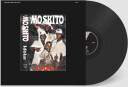
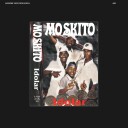
Idolar
In the vibrant streets of Tembisa, South Africa, amidst the sprawling urbanity connecting Johannesburg and Pretoria, the story of Moskito began. Formed in 2001 by Mahlubi Shadow Radebe and the late Zwelakhe Malemon Mtshali, the group first emerged as a powerhouse of pantsula dancers. However, their undeniable passion for......
fra 299,-
På lager i 1 butikker
Kjøp på nett
Fjernlager
Frakt og levering
Produktinformasjon
In the vibrant streets of Tembisa, South Africa, amidst the sprawling urbanity connecting Johannesburg and Pretoria, the story of Moskito began. Formed in 2001 by Mahlubi “Shadow” Radebe and the late Zwelakhe “Malemon” Mtshali, the group first emerged as a powerhouse of pantsula dancers. However, their undeniable passion for music soon led them down a new path—one that would cement their place in kwaito history. Spending countless hours on the street corners of their township, where they were born and raised, Shadow and Malemon danced and sang with an infectious energy that attracted crowds. It wasn’t long before the duo decided to channel their talents into a kwaito group, and after adding friends Patrick Lwane and Menzi Dlodlo, Moskito was born.(Pantsula dancing emerged in the 1950s among Black South Africans in townships and continually evolved until it became intertwined with kwaito music culture. The stylized, rapid foot movements and characteristic low-dancing became associated with kwaito as it took over South African urban culture into the early 2000s.)With limited resources, the group displayed immense creativity, recording demos using two cassette decks and instrumental tracks from other artists. They would rap and sing over an instrumental playing on one deck while the second deck records their performance. Their determination paid off when they submitted their demo to Tammy Music Publishers, who were captivated by Moskito’s style.“Kwaito was the thing ‘in’ at the time. If you did music you did kwaito. We wanted to fit in and actually it was easy,” says Radebe. “We didn’t have engineers in the group, so the first time in a real studio was with Percy and Thami to record Idolar.”That same year, the group released their debut album, Idolar, under Tammy Music. The album was an undeniable success reaching gold status selling over 25,000 units and earning them a devoted fan base across South Africa and neighboring countries like Botswana, Swaziland, Namibia and Zimbabwe. Moskito collaborated with industry legends such as Chilly Mthiya Tshabalala, who was known for his work with Thiza and Spoke ”H.” They drew inspiration from Thami Mdluli a.k.a Professor Rhythm, who had dominated the disco scene back in the 80s and 90s. Mdluli helped with musical arrangements and executive produced the album and signed on producer-engineer Percy Mudau, while Shadow and Malemon took pride in composing most of their songs. Like many of the rising kwaito artists of the time, they didn’t have music production or engineering backgrounds so they required support from engineers together their ideas down on tape.They were inspired by South African kwaito icons like Trompies, Mdu, Mandoza, and Arthur Mafokate, alongside international heavyweights like Snoop Doggy Dogg, Dr. Dre, 2Pac, and R. Kelly, Moskito created a sound that was uniquely theirs—a perfect blend of local flavor and global influence.Riding on the wave of their success, the group released their second album, Izinja, in 2004, which was met with similar enthusiasm. The title track turned out to be their biggest hit. Then, in 2006, they welcomed a new member, Tshepo “Nyamazane” Naapo, a gifted keyboard player and sound engineer. With fresh energy and talent infused into the group, Moskito dropped their self-titled album, Moskitos, in 2007, which further solidified their place in the kwaito scene. Eventually, each member went separate ways, recording their own solo albums and drifting apart creatively after Moskitos. Sadly, in 2024 Mtshali passed away.However nowadays, Moskito is working on a brand-new EP exploring new sounds. And they continue to perform around South Africa. With decades of experience and the same passion that started it all, they are ready for action once again. Along their journey from township street corners to the national stage, they conquered obstacles while creating timeless music. The surviving members of Moskito hope to reach even more listeners as their classic kwaito songs make their long-overdue debut overseas.
Pris og prishistorikk for Idolar
Idolar koster 299 kr hos én butikk. Prisradar oppdaterte prisen sist 29. november 2026.
- Prisutvikling:
- Fallende
- Laveste pris:
- 254,15
- Gjennomsnittspris:
- 295,-
- Høyeste pris:
- 319,-
Prisradar viser prishistorikk for Idolar fra de siste seks månedene. Den laveste registrerte prisen i denne perioden var 254,15 kr den 5. oktober 2026, mens den høyeste var 319 kr den 11. september 2026. Dagens pris er 44,85 kr (18 %) høyere enn den laveste registrerte prisen, men lavere enn gjennomsnittsprisen på 304 kr.
Grafen viser utviklingen i den laveste prisen blant butikkene som selger produktet. Fraktkostnader og brukte produkter er ikke inkludert.Slik samler Prisradar inn priser
Spesifikasjon
| Produkt | |
|---|---|
| Produktnavn | Idolar |
FAQ
Black Friday er fredag 27. november 2026. Sammenlign prisen på Idolar hos flere butikker, og sjekk prishistorikken der den er tilgjengelig. Kontroller at tilbudene gjelder samme modell og variant, og ta med fraktkostnaden når du sammenligner.