Jefferson's Wolf
A decisive reassessment of Thomas Jeffersons long-debated views on slavery, showing that his chief antislavery strategy was racial exclusion: the removal of emancipated Black people from the United States. Toward the end of his life, Thomas Jefferson made his most famous statement about American slavery: We have the wolf......
fra 329,-
På lager i 2 butikker
Kjøp på nett
Fjernlager
Frakt og levering
På lager
Frakt og levering
Sammenligning av produkter
Her finner du de fire mest populære produktene i denne kategorien i en lignende prisklasse som det du ser på nå.


Jefferson's Wolf
329,-

Produktinformasjon
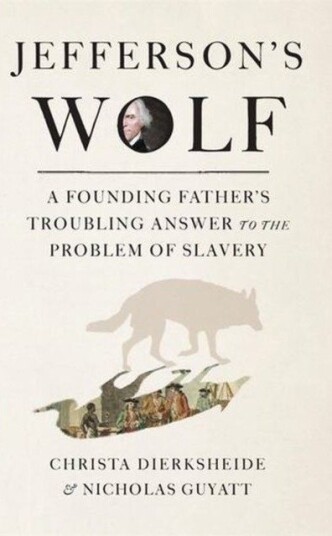
A decisive reassessment of Thomas Jefferson’s long-debated views on slavery, showing that his chief antislavery strategy was racial exclusion: the removal of emancipated Black people from the United States. Toward the end of his life, Thomas Jefferson made his most famous statement about American slavery: “We have the wolf by the ear, and we can neither hold him, nor safely let him go.” Presenting abolition as both necessary and perilous, the remark has long been relied upon to explain an apparent paradox: despite publicly opposing slavery for four decades, Jefferson had made no progress toward Black freedom in his political career by the time he died in 1826. Nor had he done so in his expansive household, where he enslaved more than 600 people, including Sally Hemings and the four children he fathered with her. Christa Dierksheide and Nicholas Guyatt argue that the key to understanding Jefferson’s antislavery position is his commitment to racial exclusion. Jefferson believed that the principal reason to abolish slavery was the threat of a massive slave revolt, but he viewed the presence of free Black people in the new nation as no less dangerous. To avert racial violence, Jefferson argued, the gradual abolition of slavery had to be paired with Black exile. Even when challenged by white and Black contemporaries with more expansive views of American belonging, Jefferson held fast to his vision for a white republic. Neither an egalitarian antiracist nor a proslavery apologist, Jefferson became the most influential advocate for racial separation in the early United States. Charting the evolution of his thought across the nation’s formative decades, Jefferson’s Wolf is a surprising and provocative account of the problem of slavery in the founding era.
Spesifikasjon
| Produkt | |
|---|---|
| Produktnavn | Jefferson's Wolf |
| book typ | boker, fagboker, religion historie og filosofi, historie |
Pris og prishistorikk
Akkurat nå er 329,- den billigste prisen for Jefferson's Wolf blant 2 butikker hos Prisradar. Sjekk også vår topp 5-rangering av beste bøker for å være sikker på at du gjør det beste kjøpet.
The New GirlLiterature of the 1950s: Good, Brave Causes Volume 6Logan's Lantern A Lunar New Year StorySoil Processes
Speech Disorder in Nineteenth Century Britain The History of StutteringOil and Gas in the Caucasus & Caspian A HistoryEducation and the Quest for Modernity in TurkeyVivisection in Historical Perspective
Alexander Jolly’s Christian Sacrifice in the Eucharist A Critical EditionLinguistic Disadvantage in Jury Trials Lessons from Hong Kong and BeyondThe Mathnawi of Jalalu?ddin Rumi, Volume III Persian Text of Books 3 and 4Heritage, Power, and Liminality Culture and the Crisis of Authoritarian Transitions in Myanmar
Finance and Culture in Nineteenth Century Britain Volume II: The World of the Stock ExchangeFinance and Culture in Nineteenth Century Britain Volume IV: Financial Crises and Financial FraudIndustrial Women, 1760–1914 Volume II: Women in Factory IndustriesIndustrial Women, 1760–1914 Volume III: The Industrial Home and Education
Industrial Women, 1760–1914 Volume IV: Law, Resistance and PowerThe Asylum in the Long Nineteenth Century Volume II: Magdalen Asylums, Lock Hospitals and Lock Asylums in England in the Long Nineteenth CenturyThe Heritage, Creativity and Innovation Nexus Critical Approaches and Interdisciplinary PerspectivesCultural Tourism