Marking Native Borders
Since time immemorial, Native peoples understandings of space and territory have defined the landscape of the Tennessee Countrythe region drained by the Tennessee, Cumberland, and Mississippi rivers and their tributaries. Marking Native Borders challenges the narrative of inevitable U.S. expansion by exploring how Cherokees......
fra 489,-
På lager i 2 butikker
Kjøp på nett
På lager
Frakt og levering
Fjernlager
Frakt og levering
Sammenligning av produkter
Her finner du de fire mest populære produktene i denne kategorien i en lignende prisklasse som det du ser på nå.


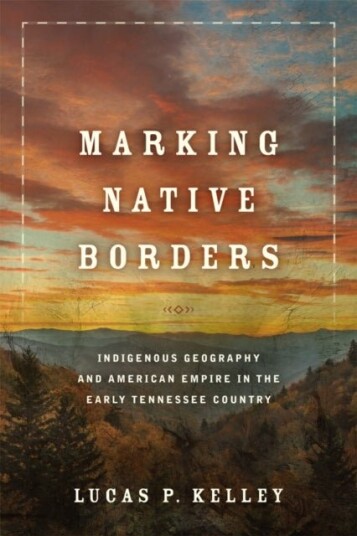
Marking Native Borders
489,-
Produktinformasjon
Since time immemorial, Native peoples’ understandings of space and territory have defined the landscape of the Tennessee Country—the region drained by the Tennessee, Cumberland, and Mississippi rivers and their tributaries. <I>Marking Native Borders</I> challenges the narrative of inevitable U.S. expansion by exploring how Cherokees and Chickasaws used these notions of space and territory in new and different ways to counter the encroachment of white settlers and land speculators in the late eighteenth and early nineteenth centuries.<BR/><BR/> When settlers began to trudge over the Appalachian Mountains, intent on making new homes on Native land, Cherokees and Chickasaws fortified their territories by creating clear borders around their nations. They further defended their permanent, inherent right to these bordered spaces by combining Indigenous ideas of communal land use with aspects of European property law. The Cherokees and Chickasaws, however, did not always agree on how to maintain control of their lands, and Lucas P. Kelley’s comparison of their differing strategies provides a nuanced, more accurate picture of Native peoples’ lived experiences in this turbulent time and place. He also describes how white settlers and speculators, in turn, revised their own strategies for expansion in response to the Cherokees’ and Chickasaws’ success in defending their national lands.<BR/><BR/> The story of the early Tennessee Country is one of competing geographies, contested sovereignties, and disputed boundaries among Chickasaws, Cherokees, settlers, and land speculators. It is a history of conflict and contestation that influenced Native sovereignty and shaped the construction of an American empire. As this book suggests, it is an ongoing story, as Native peoples’ notions of space and territory continue to impact the Tennessee Country today.
Spesifikasjon
| Produkt | |
|---|---|
| Produktnavn | Marking Native Borders |
| book typ | boker, fagboker, religion historie og filosofi, historie |
Pris og prishistorikk
Akkurat nå er 489,- den billigste prisen for Marking Native Borders blant 2 butikker hos Prisradar. Sjekk også vår topp 5-rangering av beste bøker for å være sikker på at du gjør det beste kjøpet.
The New GirlLiterature of the 1950s: Good, Brave Causes Volume 6Logan's Lantern A Lunar New Year StorySoil Processes
Speech Disorder in Nineteenth Century Britain The History of StutteringPractical Foundations of Physical GeographyEarth and ManOil and Gas in the Caucasus & Caspian A History
Education and the Quest for Modernity in TurkeyVivisection in Historical PerspectiveAlexander Jolly’s Christian Sacrifice in the Eucharist A Critical EditionLinguistic Disadvantage in Jury Trials Lessons from Hong Kong and Beyond
Intangible Cultural Heritage and Traditional Medical Knowledge Safeguarding Healing and Medical Practices in a Globalized WorldThe Mathnawi of Jalalu?ddin Rumi, Volume I Persian Text of Books 1 and 2The Mathnawi of Jalalu?ddin Rumi, Volume II English Translation of Books 1 and 2The Mathnawi of Jalalu?ddin Rumi, Volume III Persian Text of Books 3 and 4
The Mathnawi of Jalalu?ddin Rumi, Volume IV English Translation of Books 3 and 4The Mathnawi of Jalalu?ddin Rumi, Volume V Persian Text of Books 5 and 6The Mathnawi of Jalalu?ddin Rumi, Volume VI English Translation of Books 5 and 6The Mathnawi of Jalalu?ddin Rumi, Volume VII Commentary on Books 1 and 2