Micromorphological Analysis of Activity Areas Sealed by Vesuvius’ Avellino Eruption
The remarkable preservation of the Early Bronze Age village of Afragola on the Campania Plain of Southern Italy is unmatched in Europe. The site was buried under nearly a meter of volcanic ash deposited by the Avellino eruption of Vesuvius ca. 3945+10 cal. BP. The site boasts a large number of well-preserved structures, built......
fra 489,-
På lager i 2 butikker
Kjøp på nett
På lager
Frakt og levering
Fjernlager
Frakt og levering
Sammenligning av produkter
Her finner du de fire mest populære produktene i denne kategorien i en lignende prisklasse som det du ser på nå.

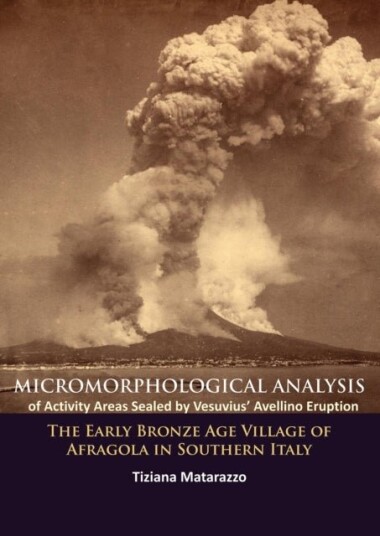
Micromorphological Analysis of Activity Areas Sealed by Vesuvius’ Avellino Eruption
489,-
Produktinformasjon
The remarkable preservation of the Early Bronze Age village of Afragola on the Campania Plain of Southern Italy is unmatched in Europe. The site was buried under nearly a meter of volcanic ash deposited by the Avellino eruption of Vesuvius ca. 3945+10 cal. BP. The site boasts a large number of well-preserved structures, built features and organic materials and thus provides a laboratory-type setting in which to investigate variability in artifact distribution and activity areas across a single village. This research utilizes micromorphological analysis of thin sections of undisturbed sediment collected at the site to understand how people used living spaces, organized daily activities and, when possible, to connect village life to broad issues related to the emergence of social complexity on the Campanian Plain. In particular, micromorphology is used to identify the type and range of human activities, the function of features and buildings, and the intensity of site occupation. The micromorphological analysis at Afragola provides a unique example of a briefly occupied agricultural village with what appears to be minimally stratified social organization during the Early Bronze Age of southern Italy.
Spesifikasjon
Produkt
| Produktnavn | Micromorphological Analysis of Activity Areas Sealed by Vesuvius’ Avellino Eruption |
| book typ | boker, fagboker, religion historie og filosofi, arkeologi |