Roman Emperors and their Illnesses
Medical history has been particularly unkind to some historical figures. The, so-called, 'mad emperors' Caligula, Tiberius and Nero cannot question their various psychiatric diagnoses or request a second opinion. Neither can Maximinus Thrax, Nero or Caligula demand further testing to refute or confirm the suggestion......
fra 329,-
På lager i 2 butikker
Kjøp på nett
Fjernlager
Frakt og levering
På lager
Frakt og levering
Sammenligning av produkter
Her finner du de fire mest populære produktene i denne kategorien i en lignende prisklasse som det du ser på nå.
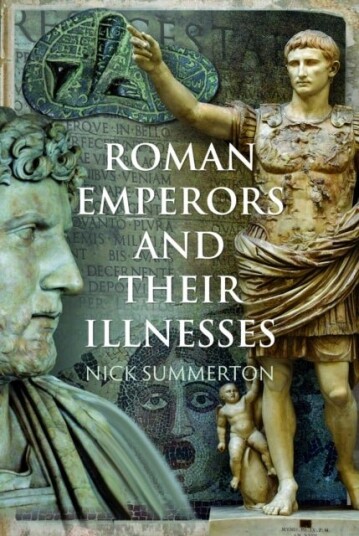
Roman Emperors and their Illnesses
329,-


Produktinformasjon
Medical history has been particularly unkind to some historical figures. The, so-called, 'mad emperors' Caligula, Tiberius and Nero cannot question their various psychiatric diagnoses or request a second opinion. Neither can Maximinus Thrax, Nero or Caligula demand further testing to refute or confirm the suggestions that they all suffered from a type of hormonal disorder.By undertaking a detailed evaluation of the ancient sources relating to Augustus, he has been re-characterised as an individual surviving to the age of 75 with a long-term lung condition. Perhaps some of his enigmatic behaviours and actions represented a reaction to developing a chronic disease at a young age?Claudius suffered from a movement disorder that affected his mobility and speech. Although highly intelligent, the response of the Imperial family to his disability was to keep him in the shadows, out of politics and public affairs. He became of figure of fun, ridiculed within Roman high society and subjected to insults and cruel tricks. The indignities and hardships he experienced in his youth probably had an impact on his character, health and behaviour. Also, it seems much more likely that he died due to a stroke or a heart attack rather than from consuming poisoned mushrooms!Marcus Aurelius might not have been as physically unwell as has been suggested by both modern and ancient historians. Despite suffering from sinusitis, gastroenteritis plus various aches and pains, there is no evidence that he had any longer-term health problems. Diagnosing the illnesses of Roman emperors might not be viewed as an appropriate line of enquiry given the enormous gulf that separates ancient and modern medicine. However, although there are certainly some major challenges in using present medical knowledge to identify past diseases, there are potential opportunities too in augmenting – or even correcting – the historical record.
Spesifikasjon
| Produkt | |
|---|---|
| Produktnavn | Roman Emperors and their Illnesses |
| book typ | boker, fagboker, religion historie og filosofi, historie |
Pris og prishistorikk
Akkurat nå er 329,- den billigste prisen for Roman Emperors and their Illnesses blant 2 butikker hos Prisradar. Sjekk også vår topp 5-rangering av beste bøker for å være sikker på at du gjør det beste kjøpet.
The New GirlLiterature of the 1950s: Good, Brave Causes Volume 6Logan's Lantern A Lunar New Year StorySoil Processes
Speech Disorder in Nineteenth Century Britain The History of StutteringPractical Foundations of Physical GeographyEarth and ManOil and Gas in the Caucasus & Caspian A History
Education and the Quest for Modernity in TurkeyVivisection in Historical PerspectiveAlexander Jolly’s Christian Sacrifice in the Eucharist A Critical EditionLinguistic Disadvantage in Jury Trials Lessons from Hong Kong and Beyond
Intangible Cultural Heritage and Traditional Medical Knowledge Safeguarding Healing and Medical Practices in a Globalized WorldThe Mathnawi of Jalalu?ddin Rumi, Volume I Persian Text of Books 1 and 2The Mathnawi of Jalalu?ddin Rumi, Volume II English Translation of Books 1 and 2The Mathnawi of Jalalu?ddin Rumi, Volume III Persian Text of Books 3 and 4
The Mathnawi of Jalalu?ddin Rumi, Volume IV English Translation of Books 3 and 4The Mathnawi of Jalalu?ddin Rumi, Volume V Persian Text of Books 5 and 6The Mathnawi of Jalalu?ddin Rumi, Volume VI English Translation of Books 5 and 6The Mathnawi of Jalalu?ddin Rumi, Volume VII Commentary on Books 1 and 2