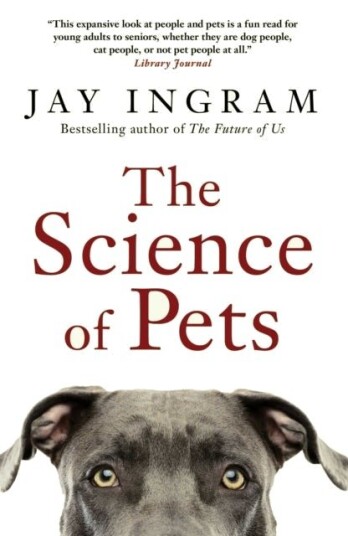
Science of Pets
In the tradition of The Inside of a Dog, top science writer and TV personality Jay Ingram shares new insights into the hearts, minds, and bodies of the animals who love us (or do they?).More than one billion pets live in homes around the world, sleeping on dog beds, cl......
fra 199,-
På lager i 2 butikker
Kjøp på nett
Fjernlager
Frakt og levering
På lager
Frakt og levering
Sammenligning av produkter
Her finner du de fire mest populære produktene i denne kategorien i en lignende prisklasse som det du ser på nå.


Science of Pets
199,-


Produktinformasjon
<B>In the tradition of <I>The Inside of a Dog</I>, top science writer and TV personality Jay Ingram shares new insights into the hearts, minds, and bodies of the animals who love us (or do they?).</B><BR><BR>More than one billion pets live in homes around the world, sleeping on dog beds, clawing at cat trees, swimming in bowls, crawling around in aquariums. Canada, the United States, Brazil, the EU, and China make up half of those households, with half of the worlds population owning a pet of some sort. Yet despite the ubiquitous animals that lick our faces and steal food off the counter, we really dont know a lot about the scientific side of their existence: why do dogs spin around when excited, do our cats really love us, do lizards make good pets, can single-celled organisms be considered pets (you can cut the hydra in two and have two pets!), what are parrots thinking, and can a horse be considered a pet? Or pigs (even those sent to market)? Or praying mantises? Or how about robot pets in Japan, caring for the elderly?<BR> <BR>Veteran science broadcaster and journalist Jay Ingram, author of twenty popular science titles, including the bestselling Science of Why series, has researched the latest science behind our beloved furry, and not-so-furry, creatures that sleep on our sofas and eat our pizza crusts. Along the way, he discusses the myths and misconceptions about our companions: do dogs always do their business facing north? Why are we seeing a rise in exotic pets such as tigers and bears? Are the deer and foxes we see rescued on Instagram considered pets and could they be domesticated? Did dogs entirely evolve from wolves, and why? Can you communicate with a turtle? Do highly intelligent octopi make good pets? And why are baby animals, like baby humans, so darned cute: have they evolved to be born cute as a survival mechanism, and would that cuteness matter to others of their own kind who might consider them their next lunch?<BR> <BR>Full of fabulous insights, humorous asides, and the wisdom of decades in science reporting, <I>The Science of Pets</I> will elucidate as it entertains. You will never look at your pets the same way again (but be sure theyre watching you closely).
Topplisten: Other Brand Bøker
Spesifikasjon
| Produkt | |
|---|---|
| Produktnavn | Science of Pets |
| Merke | Other Brand |
Populære produkter
Pris og prishistorikk
Akkurat nå er 199,- den billigste prisen for Science of Pets blant 2 butikker hos Prisradar. Sjekk også vår topp 5-rangering av beste bøker for å være sikker på at du gjør det beste kjøpet.
The Nitrate KingThe European AntarcticAid and Power in the Arab WorldUnderstanding Keynes’ General Theory
Quantification of Operational Risk under Basel IITimes of TerrorTransition from Socialist to Market EconomiesThe Olympic Games and the Environment
Economic and Monetary Union Macroeconomic PoliciesEmerging AsiaPunishment and EthicsThe Chemistry of the Theatre