
Sovereignty on Trial
The story of the legal battle between the Cherokee Nation and the State of Georgia that ultimately led to the infamous Trail of Tears and the ongoing struggles for Native sovereignty. Sovereignty on Trial tells the story of a trio of landmark United States Supreme Court casesJohnson v. MIntosh (1823), Cherokee Nation v.......
fra 329,-
På lager i 2 butikker
Kjøp på nett
Fjernlager
Frakt og levering
På lager
Frakt og levering
Sammenligning av produkter
Her finner du de fire mest populære produktene i denne kategorien i en lignende prisklasse som det du ser på nå.

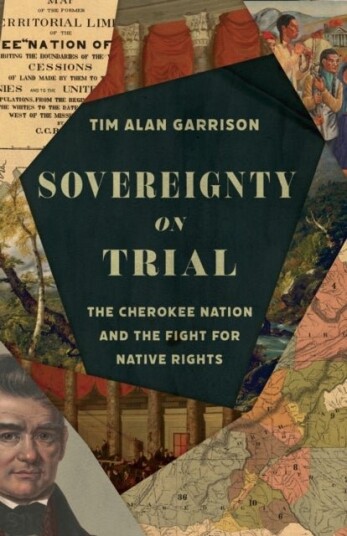
Sovereignty on Trial
329,-


Produktinformasjon
<p><b>The story of the legal battle between the Cherokee Nation and the State of Georgia that ultimately led to the infamous Trail of Tears and the ongoing struggles for Native sovereignty.</b></p> <p>Sovereignty on Trial tells the story of a trio of landmark United States Supreme Court cases—<i>Johnson v. M’Intosh</i> (1823), <i>Cherokee Nation v. Georgia</i> (1831), and <i>Worcester v. Georgia</i> (1832)—that considered the legal status of Native nations in the early nineteenth century.</p> <p>Known as the Marshall Trilogy—majority opinions all written by Chief Justice John Marshall—the decisions are inconsistent in their holdings and reasoning, leaving American Indian law and interpretations of Native sovereignty confusing and ambiguous. In <i>M’Intosh</i>, Marshall used the imperial doctrine of discovery to diminish the property rights and autonomy of the Native nations. Subsequent interpretations of Marshall’s opinion in <i>Cherokee Nation</i>, with its “guardian and ward” analogy, ultimately placed Native people in a dependent status with the United States. At the end of his judicial career, however, Marshall came to view Native rights in a different light, and his opinion in <i>Worcester</i> was a powerful acclamation of Native political sovereignty and territorial rights. Courts have tried with little success to find a coherent line through the three rulings.</p> <p>The two Georgia cases resulted from the state’s efforts to extend its jurisdiction over the Cherokee Nation and annihilate its government. These cases were decided against the backdrop of the Indian Removal Act of 1830. When President Andrew Jackson and Congress failed to enforce <i>Worcester</i>, Georgia interned and forcibly removed the Cherokee in the now infamous tragedy known as the Trail of Tears.</p> <p>Tim Alan Garrison places this trio of cases in their broader legal and historical context. Significantly, Garrison explains why Georgia sought to expel the Cherokees from their homeland, how these attacks on native sovereignty tore apart Cherokee national unity, and how the changes in Cherokee political culture determined their strategy in resisting the state’s onslaught. The Cherokee resistance against Georgia was a remarkable example of national courage for the Indigenous peoples of the world, and their determination to fight oppression through the judicial system of the United States left a lasting impact on American Indian law. <i>The Cherokee Cases</i> tells an important, if disturbing, story whose reverberations are felt to the present day.</p>
Spesifikasjon
| Produkt | |
|---|---|
| Produktnavn | Sovereignty on Trial |
| book typ | boker, fagboker, samfunnsvitenskap |
Pris og prishistorikk
Akkurat nå er 329,- den billigste prisen for Sovereignty on Trial blant 2 butikker hos Prisradar. Sjekk også vår topp 5-rangering av beste bøker for å være sikker på at du gjør det beste kjøpet.
The New GirlLiterature of the 1950s: Good, Brave Causes Volume 6Logan's Lantern A Lunar New Year StorySoil Processes
Speech Disorder in Nineteenth Century Britain The History of StutteringPractical Foundations of Physical GeographyEarth and ManOil and Gas in the Caucasus & Caspian A History
Education and the Quest for Modernity in TurkeyVivisection in Historical PerspectiveAlexander Jolly’s Christian Sacrifice in the Eucharist A Critical EditionLinguistic Disadvantage in Jury Trials Lessons from Hong Kong and Beyond
Intangible Cultural Heritage and Traditional Medical Knowledge Safeguarding Healing and Medical Practices in a Globalized WorldThe Mathnawi of Jalalu?ddin Rumi, Volume I Persian Text of Books 1 and 2The Mathnawi of Jalalu?ddin Rumi, Volume II English Translation of Books 1 and 2The Mathnawi of Jalalu?ddin Rumi, Volume III Persian Text of Books 3 and 4
The Mathnawi of Jalalu?ddin Rumi, Volume IV English Translation of Books 3 and 4The Mathnawi of Jalalu?ddin Rumi, Volume V Persian Text of Books 5 and 6The Mathnawi of Jalalu?ddin Rumi, Volume VI English Translation of Books 5 and 6The Mathnawi of Jalalu?ddin Rumi, Volume VII Commentary on Books 1 and 2