-8%
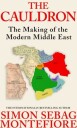
The Cauldron
How did one extraordinary prince create Saudi Arabia?Why were a million Armenians killed during WWI?How did an elderly cleric overthrow the Shah and become ruler of Iran?Why did the Arab Spring fail?Could Trump''s peace deal lead to a new Middle East?THE ESSENTIAL GUIDE TO THE MAKING OF TODAY''S MIDDLE EAS......
fra 229,-
På lager i 2 butikker
Kjøp på nett
Fjernlager
Frakt og levering
På lager
Frakt og levering
Sammenligning av produkter
Her finner du de fire mest populære produktene i denne kategorien i en lignende prisklasse som det du ser på nå.

-8%
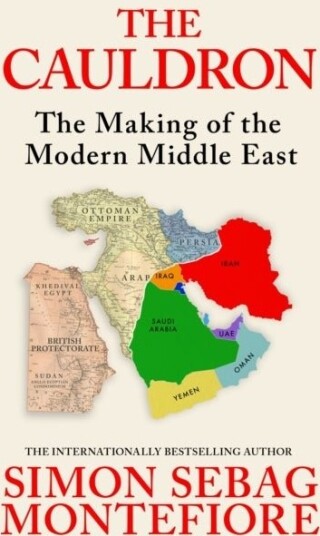
The Cauldron
229,-
249,-

Produktinformasjon
<p><b>How did one extraordinary prince create Saudi Arabia?<br>Why were a million Armenians killed during WWI?<br>How did an elderly cleric overthrow the Shah and become ruler of Iran?<br>Why did the Arab Spring fail?<br>Could Trump's peace deal lead to a new Middle East?<br><br>THE ESSENTIAL GUIDE TO THE MAKING OF TODAY'S MIDDLE EAST: A SPELLBINDING HISTORY FROM THE BESTSELLING, PRIZEWINNING HISTORIAN AND MASTER STORYTELLER, SIMON SEBAG MONTEFIORE</b><br><br>The Middle East has forever been the source of religions, prize of empires, spark-wheel of conflicts, well of radicalism and epicentre of our tumultuous world. No other region has such a hold on our imagination nor such a propensity to unleash mayhem. Yet few know its real history; fewer still understand its variety and cosmopolitanism, its complexity and interconnectedness.<br><br>In The Cauldron, Simon Sebag Montefiore delivers a fresh and unique history of the entire region in all its diversity, from 1900 up to the present day. Taking the reader on a spectacular journey from the Ottoman sultanate to the Trump presidency, from Morocco to Iran, this is a dazzling panorama of faith and fanaticism, creativity and tolerance, dictatorship and democracy brought to life by an extraordinary cast of kings, warriors, poets, terrorists and peacemakers.<br><br><b>This is the essential story of how the Middle East of 1900 became the Middle East of today - and tomorrow.</b><br><br><br><br>Who was the last great Ottoman sultan? Why did Faisal become king of both Syria and Iraq? How did Britain and France carve up the Middle East? Why did the Kurds never get a state? How did Ataturk create Turkey? Was Nasser the greatest Arab hero? Why was Algeria's war of independence so violent? Who killed Sadat and Rabin? Could a two-state solution in Israel/Palestine ever work? How did Hezbollah dominate Lebanon? Is UAE the most successful Arab state? Why did Bin Laden attack the USA; why did the USA destroy Saddam? Who created a caliphate in the twenty-first century? What happened to the Christians of Iraq? Will Israeli democracy survive? Why is the Sudanese civil war so brutal? Is Erdogan keen to recreate an Ottoman empire?</p>
Spesifikasjon
| Produkt | |
|---|---|
| Produktnavn | The Cauldron |
| book typ | boker, fagboker, religion historie og filosofi, historie |
Pris og prishistorikk
Akkurat nå er 229,- den billigste prisen for The Cauldron blant 2 butikker hos Prisradar. Sjekk også vår topp 5-rangering av beste bøker for å være sikker på at du gjør det beste kjøpet.
Practical Foundations of Physical GeographyEarth and ManIntangible Cultural Heritage and Traditional Medical Knowledge Safeguarding Healing and Medical Practices in a Globalized WorldThe Mathnawi of Jalalu?ddin Rumi, Volume I Persian Text of Books 1 and 2
The Mathnawi of Jalalu?ddin Rumi, Volume II English Translation of Books 1 and 2The Mathnawi of Jalalu?ddin Rumi, Volume IV English Translation of Books 3 and 4The Mathnawi of Jalalu?ddin Rumi, Volume V Persian Text of Books 5 and 6The Mathnawi of Jalalu?ddin Rumi, Volume VI English Translation of Books 5 and 6
The Mathnawi of Jalalu?ddin Rumi, Volume VII Commentary on Books 1 and 2The Mathnawi of Jalalu?ddin Rumi, Volume VIII Commentary on Books 3 to 6Information Technology & Libraries A Future for Academic LibrariesBefore the Bluestockings
The Rise of Party in England The Rockingham Whigs 1760–82The Decline of Neutrality 1914–41 With Special Reference to the United States and the Northern NeutralsFinance and Culture in Nineteenth Century Britain Volume I: Public Finance and Company PromotionFinance and Culture in Nineteenth Century Britain Volume III: Shareholders and the Culture of Investment