
The Limiting Principle
The concept of privacy is central to public life in the United States. It is the fulcrum of countless conflicts over reproductive rights and consumer protection, the power of tech companies and the reach of state surveillance. How did privacy come to take on such import, and what have the consequences been for American instit......
fra 369,-
På lager i 2 butikker
Kjøp på nett
Fjernlager
Frakt og levering
På lager
Frakt og levering
Sammenligning av produkter
Her finner du de fire mest populære produktene i denne kategorien i en lignende prisklasse som det du ser på nå.


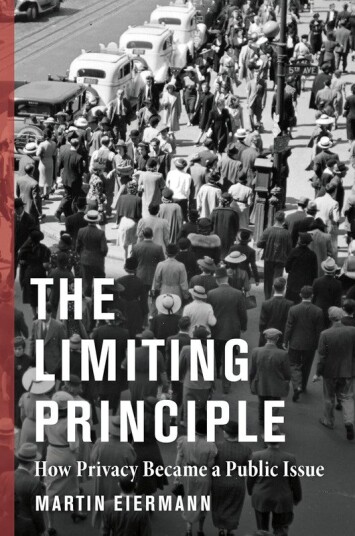
The Limiting Principle
369,-

Produktinformasjon
Winner, 2026 Harrison C. White Outstanding Book Award, Decision-Making, Social Networks, and Society Section, American Sociological AssociationWinner, 2026 Outstanding Book Award, Altruism, Morality, and Social Solidarity Section, American Sociological AssociationThe concept of privacy is central to public life in the United States. It is the fulcrum of countless conflicts over reproductive rights and consumer protection, the power of tech companies and the reach of state surveillance. How did privacy come to take on such import, and what have the consequences been for American institutions and society?Martin Eiermann traces the transformation of privacy from a set of informal cultural norms into a potent political issue. Around the turn of the twentieth century, in a nation that was searching for order amid rapid change and frequent moral panics about the ills of modern life, privacy spoke to emerging social problems and new technological realities. During this tumultuous period, political mobilization and judicial contestation shaped a legal, institutional, and administrative privacy architecture that has partly endured into the twenty-first century. Eiermann rebuts the claim that technological change renders privacy obsolete, demonstrating that the concept became increasingly capacious when it was applied to the social problems and political disputes of the information age. And he shows that it is often the selectivity—not the ubiquity—of governmental and corporate data collection that should elicit our concerns. Drawing on rich archival materials and computational research methods, The Limiting Principle provides a deeply original sociological account of the history, social significance, and limitations of privacy in the modern United States.
Spesifikasjon
| Produkt | |
|---|---|
| Produktnavn | The Limiting Principle |
| book typ | boker, fagboker, samfunnsvitenskap |
Pris og prishistorikk
Akkurat nå er 369,- den billigste prisen for The Limiting Principle blant 2 butikker hos Prisradar. Sjekk også vår topp 5-rangering av beste bøker for å være sikker på at du gjør det beste kjøpet.
The New GirlLiterature of the 1950s: Good, Brave Causes Volume 6Logan's Lantern A Lunar New Year StorySoil Processes
Speech Disorder in Nineteenth Century Britain The History of StutteringPractical Foundations of Physical GeographyEarth and ManOil and Gas in the Caucasus & Caspian A History
Education and the Quest for Modernity in TurkeyVivisection in Historical PerspectiveAlexander Jolly’s Christian Sacrifice in the Eucharist A Critical EditionLinguistic Disadvantage in Jury Trials Lessons from Hong Kong and Beyond
Intangible Cultural Heritage and Traditional Medical Knowledge Safeguarding Healing and Medical Practices in a Globalized WorldThe Mathnawi of Jalalu?ddin Rumi, Volume I Persian Text of Books 1 and 2The Mathnawi of Jalalu?ddin Rumi, Volume II English Translation of Books 1 and 2The Mathnawi of Jalalu?ddin Rumi, Volume III Persian Text of Books 3 and 4
The Mathnawi of Jalalu?ddin Rumi, Volume IV English Translation of Books 3 and 4The Mathnawi of Jalalu?ddin Rumi, Volume V Persian Text of Books 5 and 6The Mathnawi of Jalalu?ddin Rumi, Volume VI English Translation of Books 5 and 6The Mathnawi of Jalalu?ddin Rumi, Volume VII Commentary on Books 1 and 2