The Rosicrucian Counterculture
A cultural exploration of the esoteric movement and its historical impact and legacy...
fra 229,-
På lager i 2 butikker
Kjøp på nett
Fjernlager
Frakt og levering
På lager
Frakt og levering
Sammenligning av produkter
Her finner du de fire mest populære produktene i denne kategorien i en lignende prisklasse som det du ser på nå.


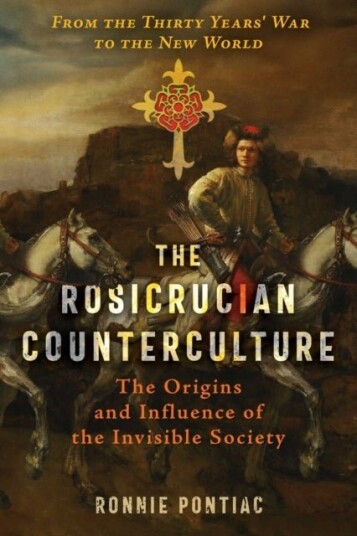
The Rosicrucian Counterculture
229,-


Produktinformasjon
<B>A cultural exploration of the esoteric movement and its historical impact and legacy</B><BR><BR>• Examines the Rosicrucian involvement of figures like Rene Descartes, Robert Fludd, John Dee, Elias Ashmole, and the alchemist pirate Prince Rupert of the Rhine<BR><BR> • Traces the saga of Rudolf II, Holy Roman Emperor, and his countercultural successors Frederick and Elizabeth, who triggered the Thirty Years’ War<BR><BR> • Shows how Rosicrucianism inspired the English Revolution and explores the Rosicrucianism of John Winthrop the Younger, Connecticut’s founder<BR><BR> Since the appearance of Rosicrucian manuscripts in 17th-century Germany, historians have questioned the authorship, intent, and significance of this esoteric movement.<BR><BR> Rosicrucianism was an underground movement whose influence in the early-modern period continues to the present. Ronnie Pontiac traces their origin, looking at the esoteric culture around Holy Roman Emperor Rudolf II and his court, including figures like John Dee, Tycho Brahe, and Rabbi Loew, the legendary creator of the Golem of Prague. Despite occultists’ fascination with Rudolf’s successors, Frederick and Elizabeth, at the start of the Thirty Years’ War—and Rosicrucian efforts to make Frederick the first Protestant Holy Roman Emperor—the esoteric renaissance in Bohemia was short-lived. However, this wasn’t the end of Rosicrucianism as its influence spread far beyond the Holy Roman Empire. Pontiac explores the movement’s impact on Oliver Cromwell and the English Revolution, as well as individuals such as Robert Fludd, Rene Descartes, Elias Ashmole, Moritz the Learned, Paracelsus, and William Shakespeare. He then details the movement’s arrival in the New World, including the Rosicrucianism of Connecticut’s alchemist governor, John Winthrop the Younger, and what Cotton Mather thought of it. Looking to the present, Pontiac shows how both pop culture and the modern psychedelic counterculture are informed by Rosicrucian ideas.<BR><BR> This book provides important historical context for the origin, development, and spread of the Rosicrucian movement and modern Western occultism in general, showing how the invisible society’s countercultural ideals remain alive today.
Spesifikasjon
| Produkt | |
|---|---|
| Produktnavn | The Rosicrucian Counterculture |
| book typ | boker, fagboker, religion historie og filosofi |
Pris og prishistorikk
Akkurat nå er 229,- den billigste prisen for The Rosicrucian Counterculture blant 2 butikker hos Prisradar. Sjekk også vår topp 5-rangering av beste bøker for å være sikker på at du gjør det beste kjøpet.
The New GirlLiterature of the 1950s: Good, Brave Causes Volume 6Logan's Lantern A Lunar New Year StorySoil Processes
Speech Disorder in Nineteenth Century Britain The History of StutteringPractical Foundations of Physical GeographyEarth and ManOil and Gas in the Caucasus & Caspian A History
Education and the Quest for Modernity in TurkeyVivisection in Historical PerspectiveAlexander Jolly’s Christian Sacrifice in the Eucharist A Critical EditionLinguistic Disadvantage in Jury Trials Lessons from Hong Kong and Beyond
Intangible Cultural Heritage and Traditional Medical Knowledge Safeguarding Healing and Medical Practices in a Globalized WorldThe Mathnawi of Jalalu?ddin Rumi, Volume I Persian Text of Books 1 and 2The Mathnawi of Jalalu?ddin Rumi, Volume II English Translation of Books 1 and 2The Mathnawi of Jalalu?ddin Rumi, Volume III Persian Text of Books 3 and 4
The Mathnawi of Jalalu?ddin Rumi, Volume IV English Translation of Books 3 and 4The Mathnawi of Jalalu?ddin Rumi, Volume V Persian Text of Books 5 and 6The Mathnawi of Jalalu?ddin Rumi, Volume VI English Translation of Books 5 and 6The Mathnawi of Jalalu?ddin Rumi, Volume VII Commentary on Books 1 and 2