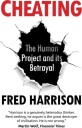
Cheating
Five thousand years ago, elites seized a surplus thatbelonged to everyone. Fred Harrison argues we never stopped paying for it inpoverty, inequality, and shortened lives. He predicted the 2008 crash and warns2028 is next. Sharing the rent from land and nature, he says, could finallybreak the cycle for good....
fra 549,-
På lager i 1 butikker
Kjøp på nett
Fjernlager
Frakt og levering
Produktinformasjon
What if the poverty, inequality,and instability in modern life are not historical accidents, but thepredictable results of a single act of fraud committed five thousand years agothat has never been fixed? This is the argument made by economist and forecasterFred Harrison. By the time you finish reading, it's hard to disagree. The fraud is elegant in itssimplicity. When people live and work together, they create a surplus — a netincome that belongs to no individual, arising from the community, shared land,and nature. Economists call it rent. For most of human prehistory, communitiesshared this surplus for the common good. Then, with the rise of agriculture andsettled civilisations, chiefs and priests realised they could take rent forthemselves. They did, leading to everything that followed: slavery, empires,the cyclical collapse of societies, and the deep poverty that coexists withgreat wealth — all stemming from that original betrayal. This is not a book about ancienthistory; it's about today. Harrison shows that the fraud still exists in thefinancial systems of every modern state. Governments tax wages and businesses —activities that create wealth — while allowing the value of land and naturalresources to remain in private hands. The result is an economy permanentlytilted against working people, a property market that inflates in regulareighteen-year boom-and-bust cycles (Harrison predicted the 2008 crash years inadvance and identifies 2028 as the next), and severe spatial inequality wherethe gap in healthy life expectancy between the wealthiest and poorest areas ofBritain stretches to eighteen years — determined not by individual choices, butby where the rent flows. The human cost is staggering. InScotland, communities whose land was taken over centuries now face the highestdrug death rate in Europe. In places like Blackpool, life is noticeably shorterand harder than in wealthy London boroughs. Harrison estimates 125,000 peoplein Britain die from preventable causes every year as a direct consequence offiscal choices that could change. These are not distant statistics; theyrepresent neighbours, parents, and children. What makes this book sounsettling is its parallel story of how the fraud became invisible. Harrisonexplains how economists and policymakers who had identified the problem weresidelined or absorbed into a professional culture that removed rent from itsdiscussions — producing a discipline able to debate inequality at great length,yet never quite pinpointing its cause. But history is speeding up. Fiveurgent crises are now converging: political deadlock, ecological collapse, massdisplacement, rising authoritarianism, and the newest and most alarming —artificial intelligence trained on a civilisation's worth of data, all shapedby a culture of cheating. An AI that adopts humanity's current values may seeno reason to keep humanity around. Harrison's solution, One WorldRent, is as ambitious as the diagnosis. He proposes replacing taxes on wageswith charges on the rental value of land and natural resources. Sharing rentsacross borders makes cooperation more profitable than conflict. Pooling globalrents could fund the transition to a sustainable climate. The boom-bust cyclewould vanish. Working people would be freed from fiscal punishment. Theinequalities quietly harming people in post-industrial towns could finallybegin to shrink. Rigorous, compassionate, andfuelled by a controlled fury at what has been allowed to persist for so long,Cheating — The Human Project and Its Betrayal is one of the most ambitiousworks of political economy in a generation — a clear explanation of why theworld is as it is, and a strong case that it doesn't have to remain this way. The Human Project faced betrayalonce. The question this book poses is whether we will allow it to be betrayedagain.
Pris og prishistorikk for Cheating
Cheating koster 549 kr hos én butikk. Prisradar oppdaterte prisen sist 28. november 2026.
- Prisutvikling:
- Vokser
- Laveste pris:
- 399,-
- Gjennomsnittspris:
- 419,-
- Høyeste pris:
- 549,-
Prisradar viser prishistorikk for Cheating fra de siste seks månedene. Den laveste registrerte prisen i denne perioden var 399 kr den 19. november 2026, mens den høyeste var 549 kr den 28. november 2026. Dagens pris er 150 kr (38 %) høyere enn den laveste registrerte prisen og ligger også over gjennomsnittsprisen på 431 kr.
Grafen viser utviklingen i den laveste prisen blant butikkene som selger produktet. Fraktkostnader og brukte produkter er ikke inkludert.Slik samler Prisradar inn priser
Spesifikasjon
| Produkt | |
|---|---|
| Produktnavn | Cheating |
| book typ | boker, skjonnlitteratur, romaner, engelske romaner |
FAQ
Black Friday er fredag 27. november 2026. Sammenlign prisen på Cheating hos flere butikker, og sjekk prishistorikken der den er tilgjengelig. Kontroller at tilbudene gjelder samme modell og variant, og ta med fraktkostnaden når du sammenligner.
Populære produkter
SSS-Class Revival Hunter, Vol. 3Gavepose Medium God julA Court of Thorns and Roses Official Playing Card Set (Night Court Inner Circle)Dreun Vinyl
Elliot Sharp Cosmic Dusts CDSiri aleneJapan dikt på den andre sidaPlassen På Kanten | Jakob Ørnbjerg | Språk: Dansk