From Donatello to Bernini Italian Sculptors' Drawings from the Renaissance to the Baroque
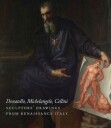
The self-portrait of Baccio Bandinelli in the Isabella Stewart Gardner Museum, Boston, shows the sculptor pointing not to a work of marble or bronze, but to a drawing. Bandinelli was particularly proud of his skills as a draftsman, and he was prolific in his production of works on paper. This set him apart from contemporaries......
fra 449,-
På lager i 2 butikker
Kjøp på nett
Fjernlager
Frakt og levering
På lager
Frakt og levering
Sammenligning av produkter
Her finner du de fire mest populære produktene i denne kategorien i en lignende prisklasse som det du ser på nå.

From Donatello to Bernini Italian Sculptors' Drawings from the Renaissance to the Baroque
449,-


Produktinformasjon
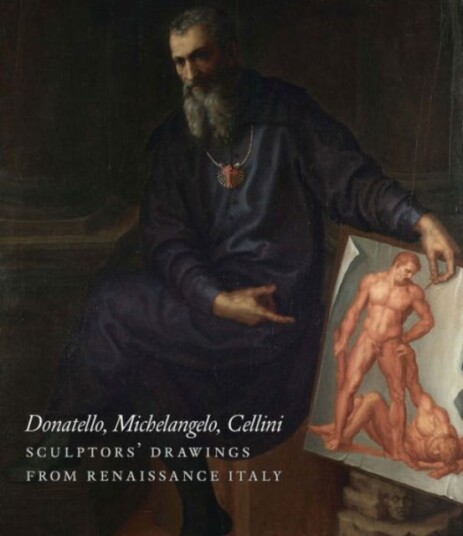
The self-portrait of Baccio Bandinelli in the Isabella Stewart Gardner Museum, Boston, shows the sculptor pointing not to a work of marble or bronze, but to a drawing. Bandinelli was particularly proud of his skills as a draftsman, and he was prolific in his production of works on paper. This set him apart from contemporaries in his profession; many Renaissance sculptors left us no drawings at all. Accompanying an exhibition at the Gardner Museum, this publication will put Bandinelli’s portrait in context by looking at the practice of drawing by sculptors from the Renaissance to the Baroque in Central Italy. A focus of the book will be Bandinelli’s own drawings and the development of his practice across his career and his experimentation with different media. Bandinelli’s drawings will be compared with those of Michelangelo and Cellini. The broader question considered, however, is when, how and why sculptors drew. Every Renaissance sculptor who set out to make a work in metal or stone would first have made a series of preparatory models in wax, clay and/or stucco. Drawing was not an essential practice for sculptors in the way it was for painters, and indeed, most surviving sculptors’ drawings are not preparatory studies for works they subsequently executed in three dimensions. By comparing both rough sketches and more finished drawings with related three-dimensional works by the same artists, the importance of drawing for various individual sculptors will be examined. When sculptors did draw, it often indicated something about the artist’s training or about his ambitions. Among the most accomplished draftsmen were artists like Pollaiuolo, Verrocchio and Cellini, who had come to sculpture by way of goldsmithery, a profession that required proficiency in ornamental design. Artists who sought to become architects, meanwhile – the likes of Michelangelo, Giambologna and Ammanati – similarly needed to learn to draw, since architects had to provide plans, elevations and other drawings to assistants and clients and had to imagine the place of individual figures within a larger multi-media ensemble. Certain kinds of projects, moreover – fountains and tombs, for example – required drawings to a degree that others did not. Sections on the Renaissance goldsmith-sculptor and sculptor-architect will allow comparison of the place drawing had in various artists’ careers. Beginning with a chapter dedicated to the importance of draftsmanship in the education of sculptors, showing works by Finiguerra, Cellini Bandinelli and Giambologna, the book will be split up into chapters dealing with the various challenges sculptors faced while drawing objects in the round, reliefs, and architectural structures. A central section will focus on Bandinelli, demonstrating the importance drawing held for him while he was preparing sculptures and as an independent token of his artistry.
Spesifikasjon
| Produkt | |
|---|---|
| Produktnavn | From Donatello to Bernini Italian Sculptors' Drawings from the Renaissance to the Baroque |
| book typ | boker, hobby og fritid, reise, europa |
Pris og prishistorikk
Akkurat nå er 449,- den billigste prisen for From Donatello to Bernini Italian Sculptors' Drawings from the Renaissance to the Baroque blant 2 butikker hos Prisradar. Sjekk også vår topp 5-rangering av beste bøker for å være sikker på at du gjør det beste kjøpet.
Logan's Lantern A Lunar New Year StorySoil ProcessesSpeech Disorder in Nineteenth Century Britain The History of StutteringVivisection in Historical Perspective
Alexander Jolly’s Christian Sacrifice in the Eucharist A Critical EditionLinguistic Disadvantage in Jury Trials Lessons from Hong Kong and BeyondIntangible Cultural Heritage and Traditional Medical Knowledge Safeguarding Healing and Medical Practices in a Globalized WorldThe Mathnawi of Jalalu?ddin Rumi, Volume VII Commentary on Books 1 and 2
The Mathnawi of Jalalu?ddin Rumi, Volume VIII Commentary on Books 3 to 6Information Technology & Libraries A Future for Academic LibrariesFinance and Culture in Nineteenth Century Britain Volume I: Public Finance and Company PromotionFinance and Culture in Nineteenth Century Britain Volume II: The World of the Stock Exchange
Finance and Culture in Nineteenth Century Britain Volume III: Shareholders and the Culture of InvestmentFinance and Culture in Nineteenth Century Britain Volume IV: Financial Crises and Financial FraudThe Asylum in the Long Nineteenth Century Volume I: Lunacy and Lunatic AsylumsGood Houses Environmental Design and Evaluation