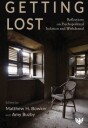
Getting Lost
With contributions from Matthew H. Bowker, Amy Buzby, Jack Fong, Evangelia Galanaki, Jill Gentile, Nathan Gerard, Theofilos Gkinopoulos, Dan Livney, Elliott Schwebachand, and Michael J. Thompson.The prime example or idée clef that unites the chapters of this volume is the experience of the global Covid-19 pandemic from 2019 t......
fra 369,-
På lager i 1 butikker
Kjøp på nett
Fjernlager
Frakt og levering
Produktinformasjon
With contributions from Matthew H. Bowker, Amy Buzby, Jack Fong, Evangelia Galanaki, Jill Gentile, Nathan Gerard, Theofilos Gkinopoulos, Dan Livney, Elliott Schwebachand, and Michael J. Thompson. The prime example or idée clef that unites the chapters of this volume is the experience of the global Covid-19 pandemic from 2019 to 2023, in which we witnessed forms of isolation and withdrawal that meant something more than separation. Withdrawal and isolation work on the self, although they may not do so consciously. Whereas it is possible to be separated from others simply as a matter of fact and from the ‘outside,’ Getting Lost focuses on complex internal and psychopolitical processes involving retreat or removal of selves from the worlds of politics, society, and culture. When we feel isolated or we withdraw ourselves, something tends to arise in our place: be it a defense system, a constellation of symptoms, or the deeply repressed psychic material giving rise to either or both. Thus, it was not coincidental that, as millions died from Covid, and as millions more experienced severely ‘broken sociality’ in the Covidian world of risk, quarantine, and/or lockdown, we also found ourselves witnessing explosions of extremism in popular discourse, in large-scale border closures, in encroachments on women’s and reproductive rights, in physical attacks on the Capitol Building in Washington, DC, in domestic and spousal violence and youth suicide, in a war of aggression waged by Russia on Ukraine, and much more. We advance the term ‘psychopolitical isolation and withdrawal’ in order to capture not only temporary periods of isolation but also detachments from reality and perverse attachments to unreality, visible on small and large scales. This partial or perverse facing of our self-experience and shared experience suggests the possibility that the post-Covidian era brings with it altered relationships to both the private and the public home, and, with them, the meanings of citizenship, sociality, publicity, thinking, and being. Plainly put, the impact of Covid-19 worldwide has damaged people’s relationship to reality and we are still coming to terms with and uncovering the many ways in which this manifests. This book aims to signal an immediate, existential threat to psychosocial and political life and to inspire further thinking, debate, and work on these vital topics that affect us all.
Pris og prishistorikk for Getting Lost
Getting Lost koster 369 kr hos én butikk. Prisradar oppdaterte prisen sist 28. november 2026.
- Prisutvikling:
- Fallende
- Laveste pris:
- 369,-
- Gjennomsnittspris:
- 383,-
- Høyeste pris:
- 399,-
Prisradar viser prishistorikk for Getting Lost fra de siste seks månedene. Den laveste registrerte prisen i denne perioden var 369 kr den 28. november 2026, mens den høyeste var 399 kr den 30. oktober 2026. Dagens pris er den laveste registrerte prisen for produktet.
Grafen viser utviklingen i den laveste prisen blant butikkene som selger produktet. Fraktkostnader og brukte produkter er ikke inkludert.Slik samler Prisradar inn priser
Spesifikasjon
| Produkt | |
|---|---|
| Produktnavn | Getting Lost |
| book typ | boker, fagboker, samfunnsvitenskap, sosiologi |
FAQ
Black Friday er fredag 27. november 2026. Sammenlign prisen på Getting Lost hos flere butikker, og sjekk prishistorikken der den er tilgjengelig. Kontroller at tilbudene gjelder samme modell og variant, og ta med fraktkostnaden når du sammenligner.