Stalin’s Top Spies
Formed a mere two months after the Bolshevik Revolution, the Cheka, the Soviet Security and Intelligence Agency, was formed to gather intelligence and promote revolution abroad. This organisation underwent a series of transformations over the following decades and achieved some remarkable successes against Nazi Germany, Imper......
fra 299,-
På lager i 2 butikker
Kjøp på nett
Fjernlager
Frakt og levering
På lager
Frakt og levering
Sammenligning av produkter
Her finner du de fire mest populære produktene i denne kategorien i en lignende prisklasse som det du ser på nå.

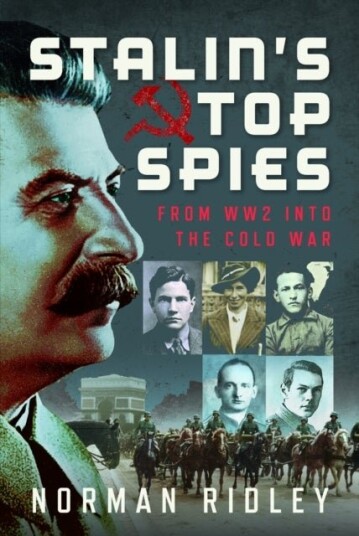
Stalin’s Top Spies
299,-
Produktinformasjon
Formed a mere two months after the Bolshevik Revolution, the Cheka, the Soviet Security and Intelligence Agency, was formed to gather intelligence and promote revolution abroad. This organisation underwent a series of transformations over the following decades and achieved some remarkable successes against Nazi Germany, Imperial Japan, the USA, and the United Kingdom. Throughout the 1930s, the Soviets pursued their ambition of gaining influence in Eastern Europe. It was a plan that inevitably brought them into conflict with Nazi Germany, against which they began setting up clandestine organisations that were meant to become operational in the event of war. The USA had been of peripheral interest to the Soviets up until the prospect of war loomed ever closer. Then, when it became known that Britain and the USA were exploring the potential of atomic weapons, espionage in the western hemisphere became of paramount importance. Despite their being allies against the Nazis, the Soviets significantly increased spying activity against both nations in an effort to develop their own atomic bomb programme. After the end of the Second World War, a new and ominous threat hung over the world in the guise of the Cold War when the Soviets brought into play their British spy network which became known as the Cambridge Five. These were agents who had been radicalised and recruited during the 1930s and then embedded within the British security services. In Stalin’s Top Spies the author explores five of the Soviet Union’s greatest spies: Leopold Trepper (and the Red Orchestra), Ursula Kuczynski (the Atomic Spy), Richard Sorge (a Soviet agent in Tokyo), Kim Philby (the Cambridge Spy), and Rudolf Abel (a Soviet intelligence officer who was arrested in the USA on charges of espionage in 1957). The book not only reveals their successes and failures, but assessing the extent to which they influenced world events from the Second World War through to the early years of the Cold War. In so doing, it also highlights the failures of the target nations to recognise the threat posed to them and exposes their lack of success in dealing with it.
Spesifikasjon
| Produkt | |
|---|---|
| Produktnavn | Stalin’s Top Spies |
| book typ | boker, fagboker, samfunnsvitenskap, statsvitenskap politikk og forvaltning |
Pris og prishistorikk
Akkurat nå er 299,- den billigste prisen for Stalin’s Top Spies blant 2 butikker hos Prisradar. Sjekk også vår topp 5-rangering av beste bøker for å være sikker på at du gjør det beste kjøpet.
The New GirlLiterature of the 1950s: Good, Brave Causes Volume 6Logan's Lantern A Lunar New Year StorySoil Processes
Speech Disorder in Nineteenth Century Britain The History of StutteringOil and Gas in the Caucasus & Caspian A HistoryEducation and the Quest for Modernity in TurkeyVivisection in Historical Perspective
Alexander Jolly’s Christian Sacrifice in the Eucharist A Critical EditionLinguistic Disadvantage in Jury Trials Lessons from Hong Kong and BeyondThe Mathnawi of Jalalu?ddin Rumi, Volume III Persian Text of Books 3 and 4Heritage, Power, and Liminality Culture and the Crisis of Authoritarian Transitions in Myanmar
Finance and Culture in Nineteenth Century Britain Volume II: The World of the Stock ExchangeFinance and Culture in Nineteenth Century Britain Volume IV: Financial Crises and Financial FraudIndustrial Women, 1760–1914 Volume II: Women in Factory IndustriesIndustrial Women, 1760–1914 Volume III: The Industrial Home and Education
Industrial Women, 1760–1914 Volume IV: Law, Resistance and PowerThe Asylum in the Long Nineteenth Century Volume II: Magdalen Asylums, Lock Hospitals and Lock Asylums in England in the Long Nineteenth CenturyThe Heritage, Creativity and Innovation Nexus Critical Approaches and Interdisciplinary PerspectivesCultural Tourism